Can a Rubber Band Really Sculpt Your Body?
The ridiculously simple truth about resistance bands that fitness influencers won't tell you
Imagine a fitness tool that costs less than your monthly gym membership, fits in your desk drawer, and delivers results that make expensive machines blush. Enter the humble resistance band – the unsung hero hiding in plain sight while bulky treadmills hog the spotlight. These stretchy loops of latex aren't just physical therapy accessories; they're portable muscle architects capable of transforming your living room into a powerhouse. The magic lies in their deceptive simplicity: unlike gravity-based weights, bands create tension throughout the entire movement, forcing muscles to work harder during both contraction and release phases. Physics becomes your personal trainer as the resistance intensifies with every inch you stretch, turning a basic bicep curl into a full-range symphony of muscle engagement.
Why do resistance bands outperform their clunky metal cousins? For starters, they adapt to your body's natural movement patterns instead of forcing you into rigid machine pathways. Try doing rotational wood chops with dumbbells versus bands – the latter allows your spine to move freely while building functional strength that translates to real-world activities like lifting groceries. Plus, bands are the ultimate equalizer: the same yellow loop that challenges your grandmother's physical therapy routine can humble a seasoned athlete when used for explosive plyometric jumps. This scalability explains why professional sports teams stash bands in their travel kits – when space is limited but performance can't be compromised, these stretchy wonders deliver.
The band's true superpower emerges when you explore unconventional applications. Wrap one around your thighs during squats to activate stubborn glute muscles that often nap during traditional workouts. Anchor a band to a door frame for rotational core exercises that build the torso stability of a gymnast. Or create instant "assistance" for pull-ups by looping it around the bar and your knee – a clever hack that turns any sturdy tree branch into a makeshift gym. Unlike weights that only work vertically against gravity, bands generate resistance in any direction, opening up diagonal and rotational movement patterns that mimic how we actually use our bodies in daily life. Suddenly, carrying a wiggling toddler or reaching for that top-shelf coffee mug becomes easier.
Maintenance? Non-existent. Unlike complex machines requiring lubrication or digital consoles prone to glitches, bands ask only to be wiped clean after use and kept away from sharp objects. Their durability surprises skeptics – quality bands withstand thousands of stretch cycles before retirement. Storage solutions range from elegant wall hooks to "stuff them in a shoebox" simplicity, making them the perfect companion for apartment dwellers or frequent travelers. When motivation wanes (as it inevitably does), the visual feedback provides instant gratification: seeing the band stretch further week after week offers concrete proof of progress that a number on a dumbbell can't match.
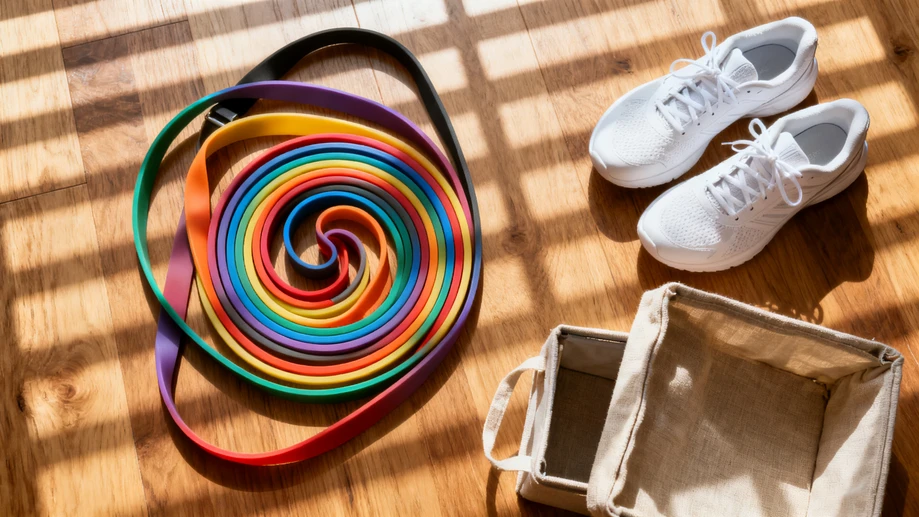
Perhaps the most revolutionary aspect is how bands democratize fitness. No more intimidating weight rooms or complex equipment adjustments – just grab a color-coded band matching your current strength level. Physical therapists have secretly used this approach for decades, gradually progressing clients from gentle rehabilitation to athletic performance with simple color upgrades. The psychological barrier to entry evaporates when your "gym" consists of a single stretchy loop rather than a room full of gleaming machinery. Suddenly, consistency becomes achievable: five minutes of band work while watching TV beats skipped workouts waiting for the perfect gym day. In a world obsessed with fitness complexity, the resistance band stands as a triumphant testament to the elegance of simplicity.