
Is Skiing Without Stretching Like Driving Without Seatbelts?
Discover how pre-ski flexibility rituals transform icy slopes into playgrounds of effortless grace
Imagine your muscles as frozen rubber bands – brittle, unyielding, and prone to snapping. That's precisely what happens when you charge onto ski slopes without proper preparation. The science is clear: cold muscles contract by up to 30%, turning your elegant downhill glide into a high-risk game of anatomical roulette. Yet countless enthusiasts still treat stretching like an optional pre-ski snack. The truth? Those five minutes of deliberate bending and reaching could mean the difference between carving perfect arcs and spending your vacation in urgent care. Your hamstrings and quadriceps aren't just passengers; they're the shock absorbers navigating every bump and jump.
Why does skiing demand such specific physical prep? Consider the physics: your body must constantly negotiate gravitational forces while maintaining precise joint angles. When you lean into a turn, your outer leg extends while the inner compresses, creating asymmetrical tension across your hips. Without supple muscles, this elegant dance becomes a series of jerky, joint-jarring movements. The solution lies in dynamic stretches – movements that mimic skiing's actual demands. Try "pendulum leg swings" facing a wall: gently swing each leg forward-backward and side-to-side like a metronome. This lubricates hip joints while activating stabilizer muscles that keep you upright when encountering unexpected moguls.
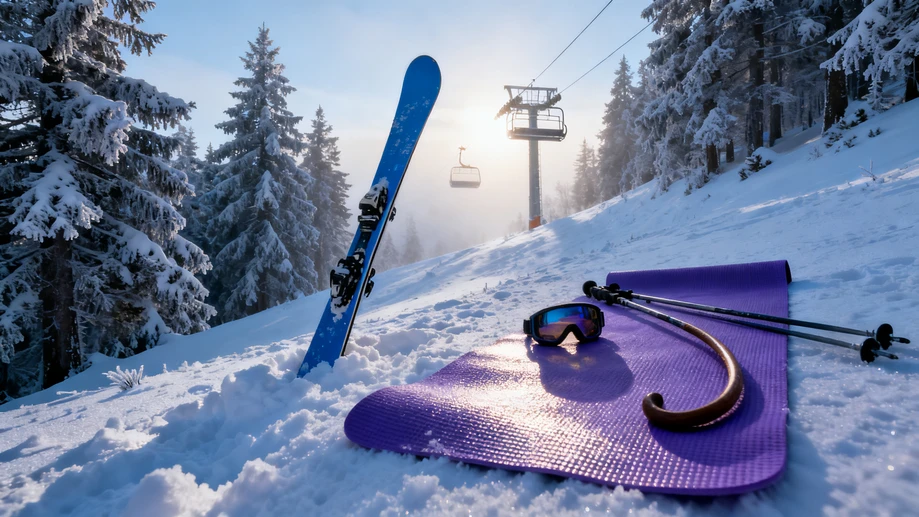
Transform your living room into a pre-ski training ground with household items. That forgotten yoga mat? Perfect for "towel hamstring glides": lie on your back, loop a towel around one foot, and slowly straighten the leg toward the ceiling while keeping hips grounded. Hold for three breaths, feeling the delicious tension release along your thigh's backside. Next, repurpose a kitchen chair for "quadriceps awakeners": stand facing the chair, lift one ankle toward your glutes, and gently press it downward. These micro-sessions build neural pathways that fire instinctively when you hit real slopes, making muscle memory your invisible instructor.
Consistency trumps intensity when building ski-ready flexibility. Research shows that 7-minute daily routines over three weeks improve range-of-motion more effectively than marathon monthly sessions. The secret? Link stretching to existing habits. Do calf raises while brushing teeth or practice "ski stance holds" during commercial breaks – knees bent at 45 degrees, hands forward as if gripping poles. Track progress with playful metrics: how many days until you can touch your toes? Can your "pretzel twist" (seated with legs crossed, rotating torso) reach further each week? This gamified approach wires stretching into your brain's reward circuitry.
Beyond injury prevention, supple muscles unlock skiing's hidden joys. Flexible hips let you sink deeper into powder turns, creating that coveted floating sensation. Elastic calves absorb terrain vibrations like natural suspension, reducing fatigue. Even your poles become lighter when mobile shoulders transfer energy efficiently. As your body becomes a responsive instrument rather than a reluctant participant, you'll discover new dimensions of mountain freedom – the effortless hop over a fallen log, the spontaneous buttering trick on a groomer, the confidence to explore gladed runs. That's the ultimate return on your stretching investment: transforming survival into artistry.