Most casual football followers rarely learn the little known hidden rules behind every World Cup official match ball selection process
From multi-scenario material testing to adaptability verification across different altitudes, every official match ball goes through more than two years of rigorous adjustment before being allowed to appear in World Cup matches
The FIFA World Cup stands as the most widely viewed single sports event on the planet, drawing billions of viewers who focus their full attention on team lineups, tactical changes, breathtaking goals and tense penalty shootouts. Most audiences barely notice the small, round object that moves between the feet of top athletes across every 90 minute session, and many take for granted that all match balls used in the tournament follow universal performance standards. In fact, the full selection and testing system for World Cup official match balls has been refined step by step over nearly a century, to eliminate hidden performance biases that could disrupt competitive fairness for teams with different playing styles.
Back in the first few decades of the World Cup’s history, there were no unified standards for match ball selection at all. Host nations could pick whatever ball they preferred, and in a small number of early matches, two competing teams even brought their own preferred balls for each half of the fixture, leading to wildly different game rhythms on each side of the break. This chaotic situation did not get fully fixed until the 1970 iteration of the tournament, when the organizing committee issued a formal rule that every match across the whole event would use a single standardized official match ball, which had to pass pre-set performance checks before being approved for use.
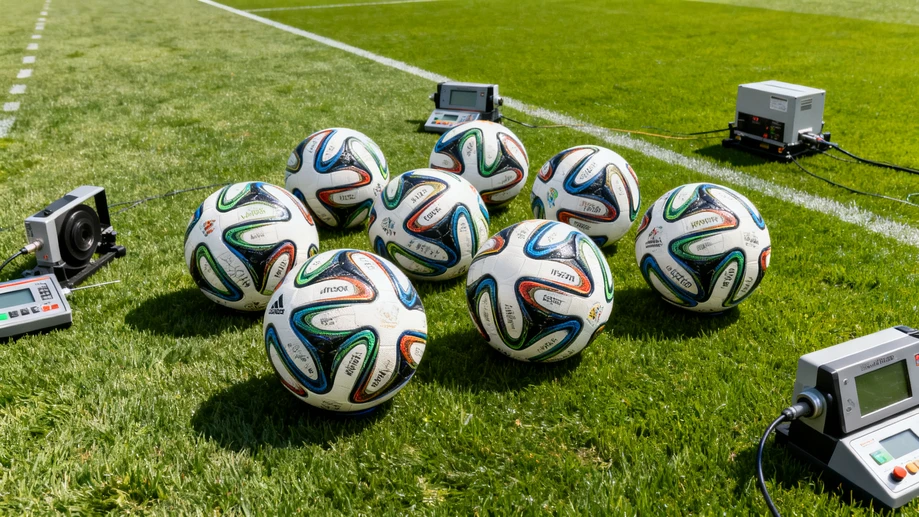
The modern testing framework for candidate World Cup match balls covers more than 20 separate test modules, far beyond the basic checks for roundness and weight that most people assume are the only requirements. Test teams will arrange hundreds of amateur and professional players of different age groups and skill levels to strike the ball thousands of times, recording every detail of its flight path, bounce height on different turf types, and performance under extreme weather conditions including heavy rain, high temperature, and thin air at high altitude venues. No candidate ball can move on to the next round of evaluation if it shows over 3% deviation in flight trajectory after being struck with exactly the same force at the same angle, no matter how aesthetically appealing its surface design is.
One of the most easily overlooked parts of the evaluation process is the feedback collection from players with different technical habits. For example, players who rely heavily on curved free kicks need the ball to have a reasonable level of friction on its surface to allow clean contact when striking the side of the ball, while defenders making long clearances prefer a ball that maintains a stable flight path without unexpected sudden turns. Engineers will adjust the number of panel seams and the thickness of the outer surface layer repeatedly to balance these conflicting needs, to make sure the final product does not give any obvious advantage to teams that favor one specific playing style over others.
After more than two years of repeated testing and adjustment, the final batch of official World Cup match balls will go through one last round of full sampling checks. Every single ball sent to tournament venues will be measured for its weight, internal pressure, roundness and water absorption rate, and the maximum allowed weight difference between any two balls is no more than 4 grams. This level of strictness is not visible to most viewers watching at home, but these small, uncelebrated checks form a solid foundation of fairness that supports every smooth and competitive match during the whole World Cup event.