
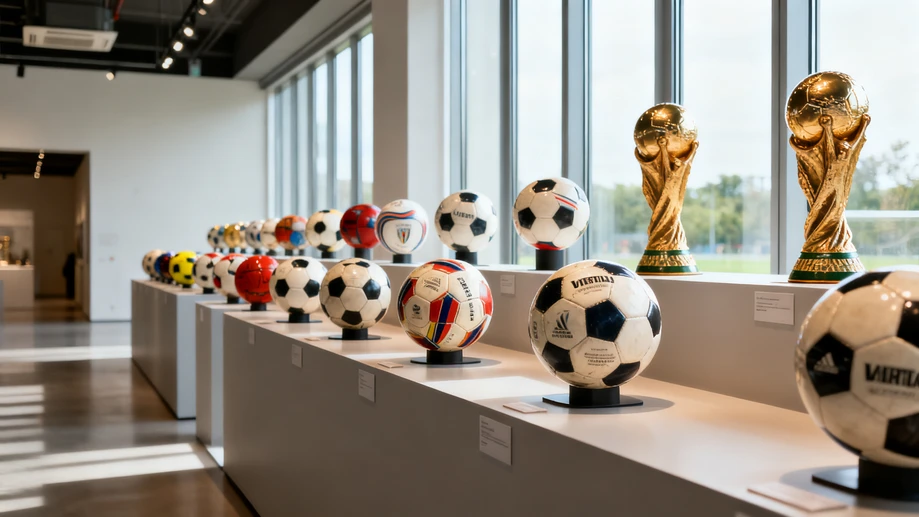
How the FIFA World Cup Official Match Ball Design Has Evolved Over 92 Years of Global Tournament History
This deep dive tracks incremental technical adjustments made to tournament match balls to balance playability, fairness and spectator experience across every edition held since 1930
The earliest iterations of World Cup match balls carried no uniform specifications, leaving host organizing committees and participating teams to source equipment from local suppliers in the first 40 years of the tournament. The very first final in 1930 even used two separate match balls, with the home nation side choosing their preferred ball for the first half, and the opposing side selecting their own model for the second half. Most of these early balls were stitched together from 12 to 18 thick leather panels, with no water resistant coating, meaning they absorbed massive amounts of moisture as soon as rain fell during play. It was not uncommon for a fully saturated leather ball to double in weight, often hitting over one kilogram when soaked, leading to frequent hand and wrist injuries for goalkeepers who made saves in wet conditions.
It was not until the 1970 edition of the tournament that organizers rolled out the first universally standardized official match ball for all matches across the full competition. This new model used 32 interlocking symmetrical panels made from synthetic coated materials, creating a perfectly spherical shape that moved far more predictably through the air than the irregular leather balls used in previous decades. The design also featured a contrasting black and white color scheme, which made the ball much easier for audiences watching on early black and white television sets to follow across the pitch. Prior to this adjustment, many viewers watching broadcasts complained that the light tan color of traditional leather balls blended into the grass, making fast break sequences almost impossible to track on low resolution screens.
Over the following four decades, tournament technical teams continued to refine the design of the official match ball, adjusting panel counts, surface texture and internal air pressure to strike a careful balance between offensive and defensive play styles. Many professional goalkeepers spoke out publicly to criticize new ball designs released in the 2000s, claiming the lighter models traveled through the air far too quickly and curved in unpredictable ways that made it almost impossible to judge their trajectory. What most spectators did not know at the time was that these adjustments were made intentionally by tournament organizers to increase average match goal counts, which had dropped to an all time low in the late 1990s as top defensive sides adopted extremely rigid low block tactical systems. The slightly more aerodynamic balls created more long range goal scoring opportunities, making matches far more engaging for casual viewers across global broadcast platforms.
More recent updates to official World Cup match ball designs have prioritized fairness for all competing sides, rather than pure entertainment value. The latest generation of balls include embedded sensor technology that sends real time location data to referee teams, eliminating the vast majority of controversial goal line decisions that once triggered weeks of debate among fans and sports analysts after each tournament. Modern designs also undergo extensive testing in climate controlled facilities to ensure the ball performs exactly the same in high altitude locations, humid tropical venues and cold dry outdoor stadiums, removing any unfair home advantage that could come from local players being more familiar with the way the ball moves in their native environmental conditions.
Tournament officials have repeatedly noted that future updates to match ball design will never prioritize experimental technology over the core skills of elite players. The core design parameters will always keep touch response for dribbling and short passing consistent with the standard balls used in top domestic leagues around the world, so players do not have to adjust their fundamental playing style before they arrive at the tournament. This steady, careful approach to incremental change is one of the many often overlooked small details that makes the World Cup the most widely watched competitive sports event on the planet, drawing billions of casual and dedicated fans to tune in every four years.