
Did You Know the FIFA World Cup Holds More Hidden Surprises Than a Last Minute Penalty Kick?
This casual fun guide walks you through little-known quirky facts of the globe's most beloved football tournament that you have never heard of even after decades of watching matches.
The very first iteration of the World Cup hosted in 1930 in Uruguay carried zero of the modern event’s luxury and standardized arrangements. No official funding for cross-continental travel existed back then, so participating teams from Europe spent two full weeks sailing across the Atlantic Ocean to reach the host country, running casual training sessions right on the deck of their cruise ships to stay in form. The original trophy, later renamed the Jules Rimet Trophy, was not cast from solid gold as many fans assumed, but only gilded with a thin layer of gold on the outside of a silver core, and it was hidden under a bed in a small Italian house for nearly a decade during World War Two to avoid being seized by invading forces. It took 16 years after the first tournament for the official match ball standard to be set, as earlier events allowed teams to bring their own preferred balls, leading to frequent disputes when the two competing sides argued that the ball chosen for the second half did not match the weight and bounce of the first half.
Many of the longstanding match rules that viewers take for granted today came from absurd mishaps in past World Cup events. The 3 points for a win scoring system that has been used for nearly 30 years was first trialed in 1994, designed specifically to encourage more attacking play and stop teams from locking up for boring 0-0 draws to advance through group stages. The first ever official Video Assistant Referee system deployed for the 2018 World Cup was added after years of arguments over incorrect foul calls that changed the final result of high stakes matches, including a handball incident that was completely missed by on-field officials in the 2010 tournament. There are even official records of unexpected interruptions to match flow, from a lost match ball that was retrieved 12 minutes later from a drainage ditch on the edge of the pitch, to a sudden swarm of bees that landed on one side of the field and delayed play for 8 full minutes while ground staff used smoke to guide the insects away.
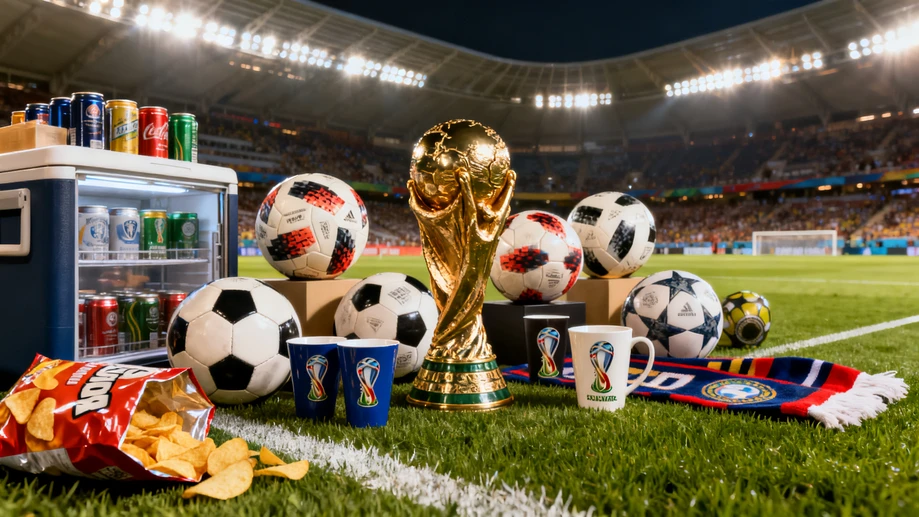
The design evolution of World Cup official match balls alone makes for a far more interesting timeline than most casual fans expect. The very first mass produced standardized ball for the 1970 Mexico World Cup, called the Telstar, used 32 black and white panels to make it clearly visible for audiences watching the match on black and white television sets, and this iconic panel design is still referenced in nearly every modern football design today. Later generations of balls added new layers of foam texture, waterproof coating and built in motion tracking chips, to cut down on unexpected water absorption during rainy matches and send real time speed and location data to broadcasting teams. Every World Cup host has also released a line of exclusive themed merchandise, from branded scarves and stadium cups to limited edition snack packs, with total global sales of official licensed products crossing 3 billion USD during the 2022 Qatar tournament.
Viewing habit data collected from across the world reveals that the World Cup has a far larger impact on daily public life than many people realize. Total cumulative viewership across all matches of the 2022 World Cup exceeded 35 billion, with the final match alone drawing a record 1.5 billion concurrent viewers across every streaming platform and traditional television channel. Retail industry surveys show that global sales of savory snacks and cold carbonated drinks jump by no less than 40% during the four weeks of the tournament, and sales of frozen pizza and pre-made finger food double in most countries that have large football fan bases. Even local power grid operators in major viewing markets will make special capacity adjustments in advance of high profile matches, to avoid unexpected blackouts caused by millions of households turning on their large screen televisions and electric coolers at the exact same moment right before kickoff.
At its core, the World Cup is far more than a competitive sporting event that hands out a trophy to the strongest team every four years. It is a rare global cultural event that strips away all regional barriers, and allows communities that speak different languages and follow different local traditions to share the exact same wave of excitement for a full month. Even viewers who do not know the difference between an offside call and a corner kick can easily pick up on the energetic, joyful atmosphere that spreads across every public viewing space during the tournament. The next time you tune in to watch a match, you can keep an eye out for those tiny hidden details around the pitch, and you might end up finding far more fun outside of the 90 minutes of regular play than you expected.