
Who Knew the FIFA World Cup Hides So Many Surprising Trivia No One Talks About
This lighthearted guide walks you through underrated fun facts about the iconic international football tournament that even diehard fans might not have heard before
The FIFA World Cup stands unchallenged as the most widely viewed single sports event on the planet, with cumulative cross-platform viewership for the 2022 Qatar edition surpassing 5 billion unique viewers, a number larger than half of the global total population. Most casual fans only associate the tournament with iconic last-minute goals, star player performances and tense knockout stage penalty shootouts, but very few know the odd, charming stories scattered across its 90-plus years of history. One of the most famous legendary anecdotes traces back to 1966, when the original Jules Rimet Trophy, the predecessor of today’s World Cup trophy, was stolen from a public exhibition in England just months before the tournament was set to kick off. The entire local police force launched a city-wide manhunt for weeks without any clues, until a stray dog named Pickles found the trophy wrapped in old newspaper buried under a wild bush in a suburban backyard, making the otherwise disastrous incident one of the most beloved lighthearted stories in World Cup history.
For decades, the operational rules and tournament arrangements of the World Cup have been adjusted and upgraded slowly along with global football development, and many of the rules people take for granted today did not exist for the first 40 years of the tournament. Red and yellow cards were not officially introduced to World Cup matches until the 1970 Mexico edition, before which referees had to rely on hand gestures, loud shouting and even chasing after disobedient players across the pitch to enforce punishment. In the 1930 World Cup final, the two competing teams even argued for hours before kickoff about which official match ball should be used for the game, and the final compromise reached was that the team from host nation would use their own preferred ball for the first half, while the visiting finalist would use their own selected ball for the second half. There were no uniform global ball standards at that time, and every participating team brought their own custom-designed ball for matches, leading to extremely uneven game experiences across different knockout stages.
Many seemingly odd decisions from past World Cup organizing committees and participating teams sound like made-up jokes, but they are 100% verified real events. In 1950, the Indian national football team successfully qualified for the World Cup tournament, but they chose to withdraw from the competition entirely right before the kickoff, after learning that FIFA had released a new mandatory rule requiring all players to wear standard football boots during matches. At that time, almost all players in the Indian team had spent their entire football careers playing barefoot on local pitches, and they believed wearing boots would completely destroy their long-honed playing style and ruin their performance. For the 1978 Argentina World Cup, the local organizing committee was facing a tight budget for team transportation, so they chose to skip all custom team bus painting and used existing public city buses across the capital, simply adding small temporary tournament logos on the side, saving nearly 2 million dollars in unnecessary extra costs.
The World Cup also holds hundreds of bizarre little records that no professional team will ever make a deliberate effort to break. No player has ever managed to score a direct corner kick goal, also known as an Olympico, in the World Cup final match throughout the entire history of the tournament. The current World Cup trophy that is presented to winning teams is not made of pure gold as many fans assume, it is crafted from solid silver and plated with 6 kilograms of 18 karat gold, making it heavy enough that it would require two adult people to lift together if it was made of 100 percent pure gold, making it far too impractical for the traditional celebratory lift by the entire winning team. It also cannot be permanently kept by any winning national team, no matter how many times they win the tournament, all winning teams only get a smaller full-size replica trophy to keep in their national football museum, while the original official trophy is kept in secure storage at FIFA headquarters between every tournament.
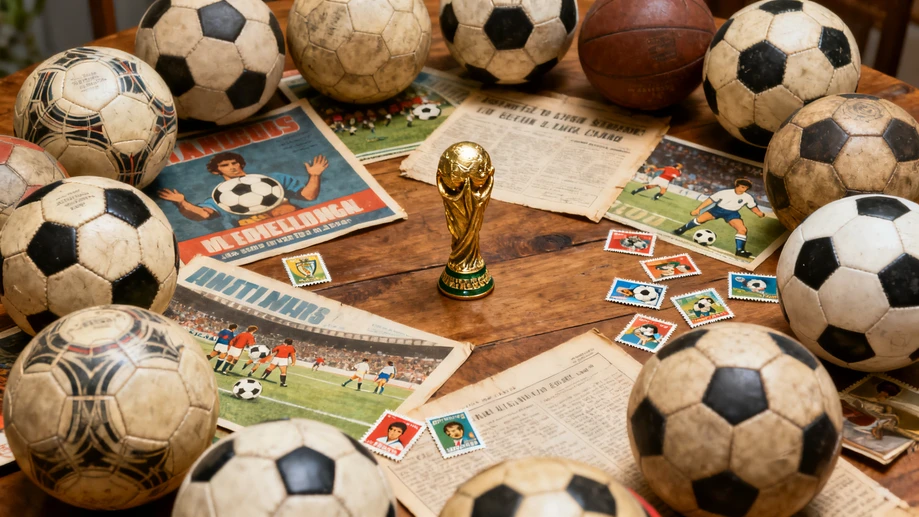
Beyond the 90-minute matches on the pitch, the World Cup has evolved into a massive global shared cultural ritual that influences nearly every part of daily life for audiences around the world. Statistical reports from major global retail platforms show that average beer sales in participating host nations rise by more than 35 percent during the one month tournament period, and the sales of frozen pre-made snacks and high-definition large screen televisions also jump by more than 28 percent compared to the same period in non-tournament years. Collectors around the world spend tens of millions of dollars every year on rare World Cup related memorabilia, ranging from vintage match tickets, limited edition postage stamps to old match used jerseys, and there are even dedicated fan conventions held every four years for collectors to trade and show off their unique pieces. Even for people who do not follow football at all, the atmosphere of shared excitement across local communities and online spaces during World Cup season turns the month-long event into a rare casual bonding experience that connects people of all ages and interests.