Did You Know Binge Watching World Cup Matches Can Help You Form A Permanent Daily Exercise Routine
This lighthearted science-backed piece breaks down how you can turn casual World Cup viewing sessions into a low-effort, zero-stress gateway to build long-lasting movement habits without ever stepping foot in a crowded gym.
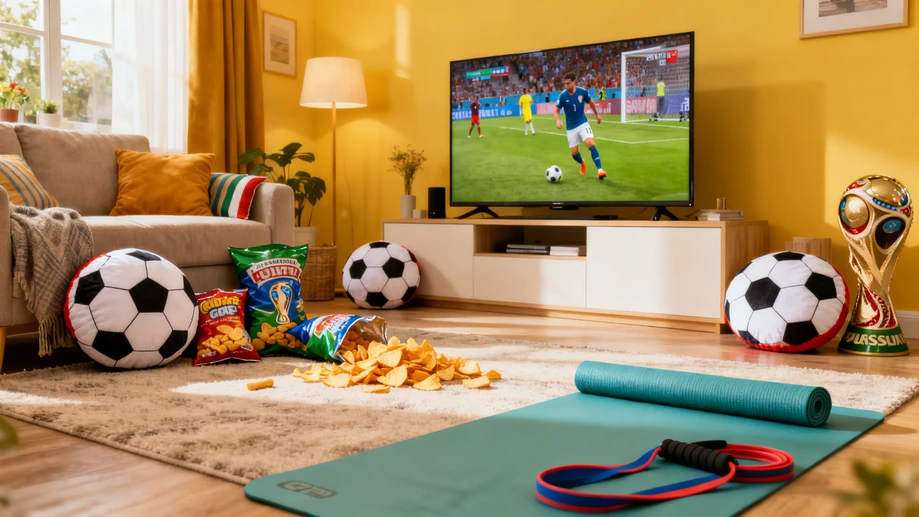
Millions of global fans set firm new year fitness resolutions right ahead of major World Cup tournaments, only to end up sprawled on couches for hours at a time, working through piles of salty snacks and sugary sodas while they cheer for their favorite teams. Most of these viewers end up feeling guilty a few days into the tournament, convinced they have completely derailed all their carefully planned exercise goals, and that they will have to spend months working their way back to even a basic weekly movement schedule. The good news is this scenario does not have to end in frustration, and you do not have to choose between enjoying every second of World Cup action and sticking to your health targets at all. The trick is to reframe your viewing sessions as built-in, ready-made trigger points that make forming new movement habits far easier than any pre-written workout plan you could download online.
You do not need to carve out extra time for long runs or intense weight training sessions to take advantage of this trick, because every World Cup match already comes with dozens of natural short breaks scattered across its runtime. Every time the referee blows the whistle for a foul, a substitution, a VAR review, or a throw-in that takes more than ten seconds to organize, you can stand up from your couch to do a quick set of gentle movements that require no equipment at all. You can do twelve slow standing calf raises, hold a 30-second wall sit, stretch out your tight shoulder muscles that have been hunched over your couch cushion, or walk back and forth across your living room twice before the referee blows the whistle to resume play. You will never miss a single exciting attacking run or last-minute goal, because all these breaks are built directly into the broadcast flow, and you will barely even notice that you are fitting in extra movement when you are focused on what happens next on the field.
Over the full length of a typical World Cup tournament, these tiny scattered movement breaks add up to a surprisingly large total of active minutes. If you watch four full 90-minute matches every day, you are automatically getting more than 20 different short break windows to fit in movement, which adds up to roughly 12 to 15 minutes of low intensity activity per match, totaling more than 7 full hours of extra gentle exercise across the full 28 to 32 day tournament run. More importantly, your brain will slowly build a new automatic association between sitting down to watch exciting sports content and the small, easy choice to stand up and move your body for a few seconds. By the time the group stage wraps up, you will find yourself automatically standing up to stretch without even thinking about it whenever a pause hits any kind of screen content you are viewing, whether that is a random short social media clip or a regular TV drama episode on a normal weeknight.
The biggest reason 90 percent of new exercise habits fail within the first three weeks is that people set far too aggressive targets on their first day, forcing themselves to complete 45 minutes of intense workout sessions before their brain has gotten used to the new routine. This World Cup linked habit building method eliminates that pain point entirely, because there is zero pressure to hit any specific performance number every single time you sit down to watch a match. If you are extra tired after a long work day and you spend an entire game fully seated without moving at all, you do not have to feel any guilt or shame for “failing” your routine. You can simply pick back up the tiny movement breaks in the next match you watch, and no progress will be lost in the long run. Most people who use this method end up choosing to take their 15 minute halftime break to walk around their neighborhood block to grab a cold drink from the kitchen or stretch out in the sun on their porch, adding even more low-stakes movement without any extra effort.
By the time the final World Cup match wraps up and the last trophy is handed out, you will have more than 30 consecutive days of consistent tiny movement choices under your belt, and that newly wired neural connection between sitting down for long periods and moving your body will feel completely natural for months afterwards. You will not have to drag yourself out of the house to sign up for overpriced gym memberships to keep this momentum going, because you will already be used to moving your body whenever you get a small free moment in your day. Many people who start this casual habit during the World Cup end up voluntarily adding 10 minute quick home workout sessions to their free time on the weekends a few months later, and they never go back to the old sedentary routine that left them feeling stiff and sluggish after long days at work.