Can You Match The World Cup Pro Players’ Stretching Routine Without Leaving Your Couch
Turn your lazy World Cup viewing marathons into a low-effort stretching habit that boosts mobility without demanding extra time or fancy gear
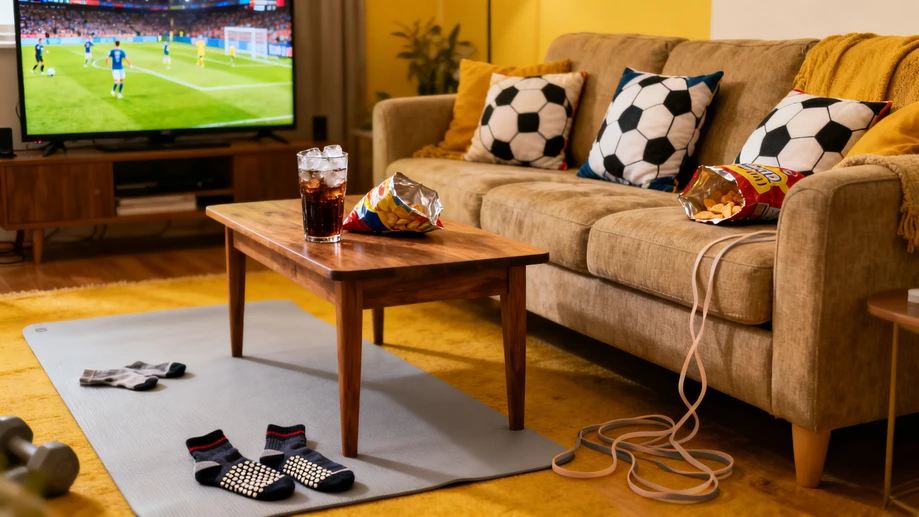
Millions of casual football fans around the world carve out hours every week to catch every second of World Cup action, often settling deep into overstuffed couches with stacks of snacks and cold drinks for back-to-back match viewings. Most people walk away from these multi-hour sessions with stiff necks, sore lower backs, and tight hips that linger for days, writing off the discomfort as a trivial side effect of enjoying their favorite sport. What almost no one talks about is that the exact pre and post-match stretching routines elite professional players rely on to stay loose and avoid injury can be adapted perfectly to fit right into these at-home viewing sessions, no workout clothes, gym membership, or expensive equipment required. You do not need to be a trained athlete to benefit from the same muscle care the pros use, and you do not even need to pause the match to fit in every single stretch.
You can break a standard 90-minute World Cup match plus halftime break down into dozens of tiny gaps of dead time that are perfectly suited for quick, low-intensity stretches that do not pull your attention away from the action on screen. When referees pause play for a free kick and players line up across the pitch to set up the defensive wall, that 20 to 30 second window is the perfect chance to stand up slowly and lean one calf against the edge of your coffee table for a quick calf stretch, holding until the referee blows their whistle to restart play. During longer pauses for VAR reviews or substitution announcements, you can slip into a seated figure four stretch right on the edge of your couch, leaning your torso gently forward to release tension in your hips that builds up after sitting still for 20 minutes straight. Even short breaks when the ball rolls out of bounds for a throw in give you enough time to tilt your head side to side slowly and release the tightness in your neck that comes from leaning forward to track fast passes across the screen.
The best part of this habit system is that you never have to set aside dedicated workout time or force yourself to stick to a rigid fitness schedule that feels like a chore. You can tie every stretch action directly to the parts of the World Cup viewing experience you already look forward to, turning movement into a fun celebration rather than a boring obligation. Every time the team you support scores a goal, you can raise both arms straight over your head and stretch your whole torso up for three slow counts as part of your cheer, turning the excitement of the moment into a quick full body stretch. Every time your favorite winger pulls off a stunning long dribble past three defenders, you can do a slow side stretch on the opposite side of your body to mark that fantastic play, building a small positive association between watching the sport you love and taking care of your body. Over the course of a single World Cup tournament, these tiny, scattered movements add up to hours of gentle stretching that most people would never fit into their normal daily routines.
Fitness researchers have confirmed that these scattered 1 to 2 minute stretching breaks spread out every 20 or 30 minutes deliver far better long term results for casual people than one single 60 minute intense stretching session crammed in once a week. Muscle tension builds slowly and steadily as you stay in the same seated position, and letting that tension sit unaddressed for hours on end leads to the chronic soreness, stiff joints, and even reduced mobility that so many office workers and home viewers deal with on a daily basis. The elite pro players who train for hours every day do not rely on one long stretching session at the end of their training to fix all their muscle tightness either, they build 2 or 3 minute stretch breaks into every lull of their practice schedule to keep muscle tension from building up in the first place. This approach is far more sustainable for regular people, because you do not have to push your body past its comfort zone to see real improvements, and you will not burn out or abandon the habit after two or three days of forced effort.
By the time the final World Cup match wraps up, you will not just have a collection of unforgettable match memories and new favorite players, you will have built a low-fuss movement habit that sticks around long after the tournament trophy is handed out. Most fans end up going back to their normal daily routines after the World Cup ends, but they find themselves automatically doing a quick neck stretch during TV commercial breaks, or pausing to pull their calf against a countertop after sitting at their desk for half an hour. This small shift does not turn you into a professional athlete overnight, but it eliminates the random soreness and minor joint aches that pop up after long work days or long movie marathons, making your whole daily life feel a little more comfortable and easy. You can even turn the activity into a fun household game with other people watching matches alongside you, setting small silly stretch challenges for every VAR review and handing out small snack prizes to whoever completes their stretch routine first, turning your casual viewing space into a low pressure fitness zone that feels nothing like a stuffy gym.