Did You Know Watching World Cup Matches At Home Can Help You Build A Sustainable Fitness Routine
This fun, no-pressure guide links your favorite World Cup viewing ritual to tiny, unnoticeable home workout moves that help you form long term exercise habits without extra time or effort.
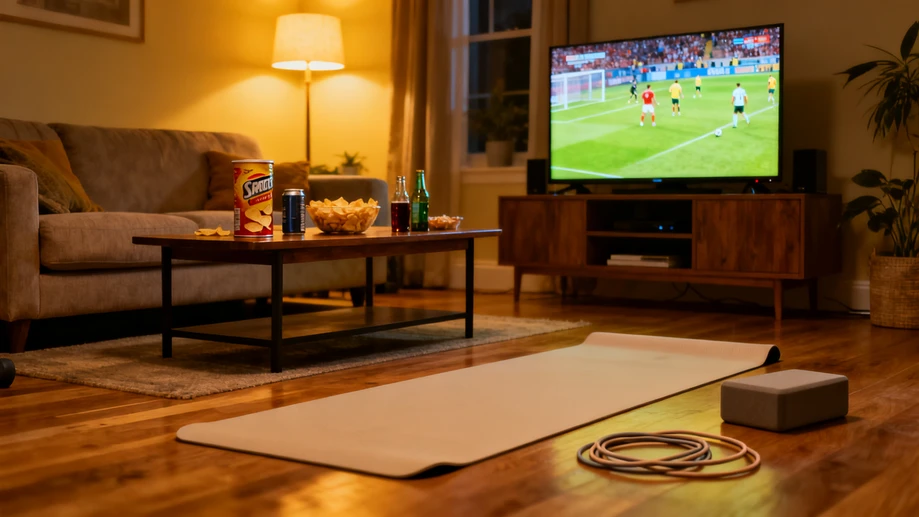
Most casual football fans have fallen into the exact same routine every World Cup cycle: stock the coffee table with bags of crispy snacks and cold drinks, sink deep into the softest spot on the couch, and stay glued to the screen for 90 minutes straight, barely moving a muscle even during half time breaks. By the time the final whistle blows after the last match of the day, most people notice stiff necks, sore lower backs, and that heavy sluggish feeling that comes from staying in one position for hours. For years, people have joked about the extra pounds they gain over the course of a full World Cup tournament, and most write off post-tournament fitness plans as impossible pipe dreams that get abandoned within three days. What no one talks about, though, is that the fixed schedule of consecutive matches is actually one of the best built-in structure you could ask for to build small, steady movement habits that never feel like a chore.
You do not need any fancy gym memberships, expensive fitness gear, or even extra blocks of free time to turn your viewing sessions into low effort exercise opportunities. Every natural pause in the match works as a perfect reminder to sneak in a set of stretches that target the parts of your body that get tight after long hours of sitting. When referees call for a quick injury break to check on players on the pitch, you can slip your feet off the couch and do ten slow ankle circles on each side to boost blood flow to your lower legs. When the broadcast cuts to a replay of a great goal or a controversial referee decision, you can tilt your head gently to each side to stretch the neck muscles that have been tensed up from leaning forward at the screen. Even the commercial breaks that most people complain about give you two full minutes to stand up, lean against the edge of your couch, and pull one ankle back toward your hip to stretch your tight quad muscles, no special yoga mat required. Over the course of a full 90 minute match plus half time, these tiny scattered stretches add up to nearly 20 full minutes of active movement, all happening without you ever having to pause the match you are watching.
If you are looking to add a little bit more active movement without turning the whole experience into a grueling workout, you can tie simple, low intensity moves to fun match moments that you get excited about. Set a loose rule that every time your favorite team takes a shot on target, you do 12 slow steps of high knees in place, and every time they score a goal, you do 15 quick bodyweight squats right next to your couch. You do not have to push yourself to the point where you are out of breath and miss the key moments of the match, and if you are watching multiple matches in a single day, these small bursts of movement add up to hundreds of calories burned by the end of the night. A lot of casual fans who tried this trick in previous World Cup cycles shared that they ended up walking more than 30,000 total steps over the course of a single tournament, without ever lacing up their running shoes for a dedicated jog outside. There is zero pressure to hit any specific fitness benchmark, because these small moves are just framed as a fun little victory ritual tied to the football you love, not an obligation you are forced to check off a to-do list.
The biggest reason this trick works far better than most generic fitness plans people try at the start of the new year is that it never triggers that feeling of dread that most people associate with exercise. Far too many people quit their new workout routines within a week because they set overly ambitious goals, buy hundreds of dollars worth of fitness equipment they never use, and force themselves to wake up at 6 a.m. to do a full hour of workout before work, creating so much mental resistance that they give up the second they miss a single day. Tying movement to your pre-existing, favorite hobby of watching football eliminates all that mental friction immediately. You are not rearranging your whole schedule to make time for the gym, you are just adding a few small movements to something you were already going to do for fun anyway. After two weeks of this small consistent practice, you will notice that you no longer get stiff and sore after sitting through a full match, and that post-viewing heavy bloated feeling from eating snacks on the couch fades away almost completely.
Best of all, the small habits you build over the course of the World Cup do not disappear the second the tournament trophy gets handed out at the final match. You can easily carry this ritual over to the regular season club football matches you watch later in the year, or even to other leisure activities you enjoy at home, from watching your favorite drama series to tuning in to live music performances. Over a few months, you will find that stretching during pauses and short bursts of light movement during exciting moments become completely automatic, and you will no longer have to remind yourself to get up and move every hour. You never have to commit to a strict diet or an intense training program, and you never have to push yourself past a comfortable level of effort, which makes it almost impossible for you to burn out and abandon your habits. It turns out the secret to long term sustainable fitness has been sitting on your living room couch with you, right next to your World Cup snacks, this entire time.