
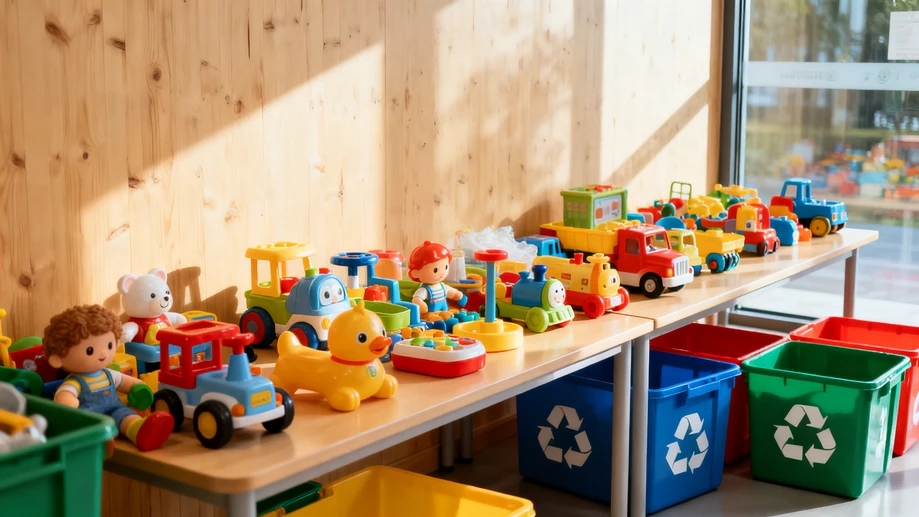
Did Your Neighborhood’s Old Toy Swap Just Cut 12 Tons of Plastic Waste This Year?
A tiny grassroots toy reuse program launched by three local parents in a quiet suburban district has delivered an unexpected environmental win that outperforms many large-scale municipal plastic reduction plans.
The Beaverton community volunteer team in suburban Portland wrapped up their 2024 year-end review last week at the local community center, and the final statistics they printed out left every attendee cheering in surprise. The low-cost toy swap project that first started on a rickety foldable table in a residential garage 12 months ago has circulated 18729 pieces of pre-loved children’s toys for free across 8 adjacent neighborhoods, avoiding 12.3 tons of virgin plastic that would otherwise be used to produce brand new toys, and preventing 9.1 tons of discarded plastic toys from being shipped to local landfills that can take up to 400 years to fully decompose the material. Local waste management officials confirmed that the total plastic reduction generated by this small project is higher than the combined effect of three local public plastic bag ban campaigns held between 2021 and 2023.
The program started back in early January 2024, when three stay-at-home parents bumped into each other at the elementary school pickup line and complained about the exact same headache: their kids lost interest in most newly bought toys in less than two weeks, and the garage was already packed full of untouched plastic figurines, building block sets, remote control cars and doll accessories that no one in the family wanted to keep. They first put out a foldable table at the community garage sale event, placed all their unwanted toys there with a “take one leave one” sign, and found that all 217 toys they brought were picked up within 45 minutes, with many other residents bringing their own unused toys to add to the pile. Within three days, more than 200 local families had contacted the three parents to ask if they could keep the small swap corner running long term.
To clear public concerns over hygiene issues, a group of volunteer nurses and childcare workers in the neighborhood offered to run a free disinfection station beside the swap area, using food-safe sanitizing spray and high-temperature UV boxes to clean every toy the moment it is handed in. The team also added a tiny personalized story card for each toy, inviting the previous owner to write down a small memory connected to the item, such as “This spaceship once watched 17 bedtime stories with me” or “This truck helped me move all my rock collection last summer”. The little cards became a huge hit among local kids, many of whom stopped begging their parents for the latest newly released plastic toys sold in big chain stores, and started rushing to the swap site every weekend to hunt for toys with fun backstories. A local elementary school teacher noted that more than half of her students mentioned swapping a toy with an interesting story as their favorite weekend activity at the start of the fall semester.
By the end of March 2024, the single swap table had expanded to 7 fixed 24/7 swap stations across the district, with a point system that allows residents to get 3 free toys for every 1 intact qualified toy they hand in. Local retail data shows that the sales of new children’s plastic toys in Beaverton dropped by 42 percent throughout 2024, two local toy stores even reached out to the volunteer team later in the year, donating more than 3000 pieces of unsold brand new overstock toys to the swap stations instead of sending them to waste disposal facilities as they did in previous years. Local environmental policy researchers noted that the project’s plastic reduction effect is equivalent to planting 2100 new mature trees that can absorb carbon dioxide for 10 full years, a result that no one predicted from a non-funded small resident activity.
Up to now, the Beaverton toy swap model has been copied by 27 other small communities across Oregon and Washington, many of whom added extra swap sections for unused garden tools, children’s picture books and second hand bicycles, bringing the total plastic reduction number of the whole regional network to more than 47 tons by the end of 2024. The volunteer team said they spent less than 1800 dollars running the whole project for a full year, most of which went to the purchase of sanitizer wipes, UV disinfection box filters and printed story cards. They are now compiling a 12-page free operation guide that will be uploaded to public community service websites for free download, so that any neighborhood that wants to launch a similar program can do it without professional support or large government funding. They added that many people think large scale environmental changes can only happen through big corporate policy adjustments or expensive municipal projects, but this toy swap case proves that ordinary people can make huge differences to local environmental conditions with a tiny bit of shared effort in their daily lives.