
Why Can’t Ordinary Commercial Jets Simply Fly All the Way to Outer Space?
This easy-to-follow aerospace science explanation unpacks the practical, physical and economic barriers that separate daily air travel from space flight, with no overly complicated jargon involved.
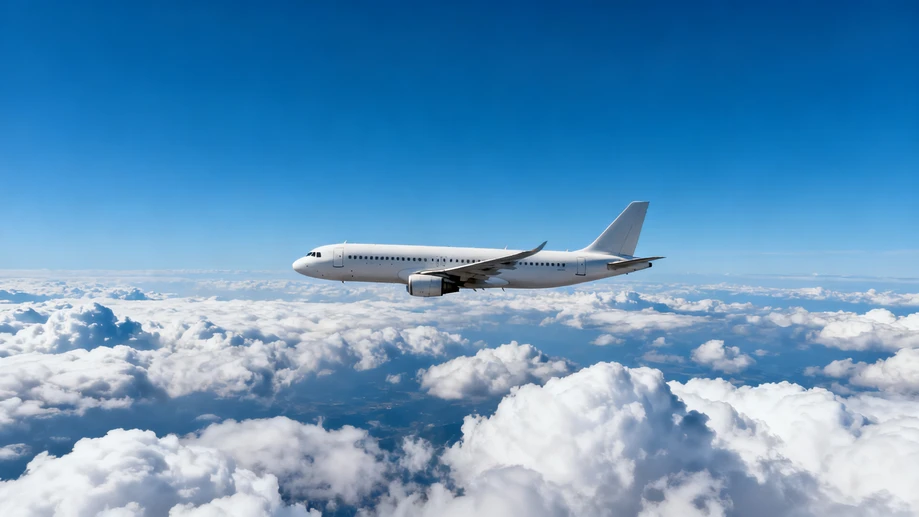
If you have ever sat by a window seat on a long-haul flight, staring out at the puffy white clouds rolling far below and the deep, unbroken blue of the sky stretching to the horizon, you have almost certainly wondered why the pilot cannot just push the throttle a little further and climb past the vague blurry line that marks the edge of the atmosphere. For most people, the 12-kilometer cruising altitude of a standard wide-body jet already feels like the edge of the known world, far above all mountain peaks and most natural weather phenomena, but that height barely counts as a scratch on the surface of our planet’s habitable zone, let alone anywhere close to the official 100-kilometer Kármán line that marks the start of outer space. The vast majority of ordinary aircraft cannot even climb past 15 kilometers without running into severe performance limits, no matter how much their pilots try to ascend.
The first and most obvious barrier lies in the basic design of the jet engines that power every commercial airliner you have ever ridden on. Turbofan engines, the standard power unit for all modern passenger jets, work by pulling in huge volumes of ambient air, mixing the oxygen in that air with jet fuel, igniting the mixture to generate hot thrust that pushes the plane forward. As altitude rises, the density of the atmosphere drops rapidly, and the share of oxygen available to feed that combustion process falls right alongside it. At 25 kilometers above sea level, the atmosphere contains less than 3 percent of the oxygen present at sea level, which is far too little to sustain even the most efficient turbofan engine for more than a few seconds before it sputters and shuts down entirely. Even if engineers modified the jet to carry its own supply of oxidizer the way a traditional rocket does, the standard aircraft fuselage is only engineered to withstand a maximum pressure difference equivalent to flying at roughly 15 kilometers. If you pulled the plane higher where external air pressure drops to near zero, the 0.8 atm of pressure maintained inside the cabin to keep passengers comfortable would push outward on every inch of the fuselage with enough force to rupture the metal frame in minutes.
Practical economic factors make this hypothetical modification even more nonsensical for everyday travel. Modern high-bypass turbofan engines are designed to maximize fuel efficiency at cruising altitude, and their energy efficiency per passenger kilometer is more than 120 times higher than that of a typical chemical rocket engine. If you reconfigured a regular airliner to carry enough oxidizer and reinforced fuselage materials to reach the Kármán line, the fuel and structural weight would eat up almost all of the space that was previously used for passenger seats, and the ticket price for a single transoceanic flight would jump to roughly 250,000 US dollars per person. The high-speed return to lower atmosphere would also generate over 1000 degrees Celsius of frictional heat on the surface of the aircraft, which the standard aluminum alloy used for airliner exteriors can not resist, requiring full replacement of the entire outer shell after every single flight. None of these costs or risks make any sense for people who just want to get from one city to another on a routine trip.
Instead of trying to turn regular passenger jets into makeshift spacecraft, aerospace engineers have been working for the past two decades to build a middle category of sub-orbital vehicles that combine the best features of both aircraft and rockets for new types of low-cost travel. The typical design uses a large, specially modified jet-powered mothership to carry a small passenger rocket up to 15 kilometers of altitude, where the air is thin enough to cut down on atmospheric drag but still dense enough to support normal jet engine operation. The smaller rocket then detaches from the mothership and fires its own engines to climb above the 100-kilometer Kármán line, where its passengers get three to five full minutes of zero-gravity experience and a clear, unobstructed view of the full curve of the Earth against the pure black of outer space. After that, the vehicle turns off its engines and glides all the way back to a standard airport runway to land, eliminating the need for expensive heat shields or large landing parachutes that are used for traditional space capsules.
Many of these sub-orbital flight programs are expected to enter formal commercial operation before the end of this decade, with projected ticket prices dropping to roughly 50,000 US dollars per person in the first few years, and potentially falling further as production scales up. That means in the near future, you will not need to be a professional astronaut trained for years in a space agency to get a chance to see our planet from the edge of space. All you will need to do is book a special flight ticket at your local airport, go through a short 30-minute safety briefing, and take off on a ride that feels far more familiar than most people imagine. This small, accessible step between regular air travel and full space exploration will be the first time the general public gets to touch the boundary of outer space in a way that fits perfectly into the pace of ordinary daily life.