Resistance Bands Are Secretly the Best Thing in Your Gym Bag
Discover why stretchy loops outsmart expensive machines for home fitness revolutions
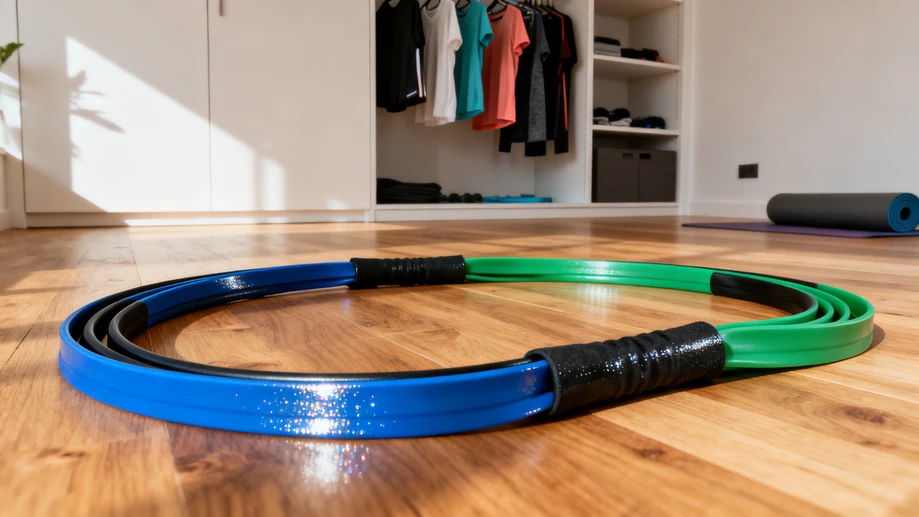
Your fancy treadmill now hosts a festive sweater collection, the stationary bike doubles as a bookshelf, and the elliptical machine has become a drying rack for delicates. We've all witnessed the tragic fate of ambitious home gym equipment. But coiled quietly in a drawer lies a hero that refuses to gather dust: the humble resistance band. These stretchy loops of rebellion laugh in the face of expensive, space-consuming machinery. Their superpower? They transform any doorway, chair, or blank wall into a personal fitness studio. Unlike temperamental gadgets that demand Wi-Fi updates or complicated assembly, these latex rebels deploy instantly. They'll happily accompany you to the park, stuff into your suitcase, or hide under your couch until motivation strikes.
What makes these rubbery rings so remarkably effective? Science reveals that elastic resistance provides constant tension throughout movements. While weights rely on gravity (making exercises easiest at certain angles), bands maintain steady challenge. This activates stabilizer muscles conventional equipment often neglects. A University of Wisconsin study found elastic resistance builds strength comparably to weight machines for many muscle groups. Better yet, bands adapt to your strength level instantly. Loop two together for extra resistance or shorten the band by stepping on it. Try that with your six-foot barbell! They're joint-friendly too, absorbing shock during explosive movements and allowing natural motion patterns free from restrictive machine tracks.
Here's where bands truly outshine their clunky competitors: versatility. That single loop can deliver over 50 exercises targeting every major muscle group. Wrap it above your knees during squats to fire up stubborn glutes. Anchor it underfoot for standing rows that sculpt your back. Thread it around a door hinge for seated chest presses rivaling any bench setup. Yoga enthusiasts use bands to deepen stretches, runners activate hips before sprints, and physical therapists deploy them for rehabilitation. Even better? They cost less than dinner for two. While that $2,000 elliptical gathers dust, a complete set of bands with handles and door anchors delivers comparable results for under $50.
The magic truly happens when bands become fitness habit architects. Their accessibility obliterates excuses. Too tired for the gym? Loop a band around your ankles while watching TV for glute bridges. Morning meeting in 10 minutes? Do standing bicep curls by your coffee maker. Unlike intimidating machines requiring perfect form, bands offer forgiving feedback. Pull too hard? The band simply stretches further without crashing. They reward consistency through micro-progressions: swapping to a thicker band color, shortening your grip, or adding pulses. Before long, that two-minute doorway stretch session evolves into an energetic 20-minute routine. Resistance bands don't demand life-altering commitments - they slip effortlessly into existing routines.
Consider band care your fitness ritual's secret handshake. Unlike rust-prone weights or belt-driven machines, these resilient loops require minimal maintenance. Wipe them down after salty sweat sessions, avoid storing near sharp objects or direct heat, and rotate bands to prevent overstretching. Notice chalky residue? That's normal latex oxidation - just sprinkle cornstarch to restore smoothness. Replace them when you see nicks or permanent thinning. Compared to oiling treadmill belts and resetting digital displays, this is refreshingly low-tech upkeep. By choosing bands, you're not just saving space and money; you're joining a quiet revolution against complicated, over-engineered fitness culture. Sometimes the simplest tools deliver the most extraordinary transformations.