Who Knew World Cup Watch Parties Could Turn Your Couch Side Into A Full Body Workout Space?
This casual fun guide links World Cup viewing routines to low-effort home fitness habits that feel far less boring than traditional scheduled gym sessions.
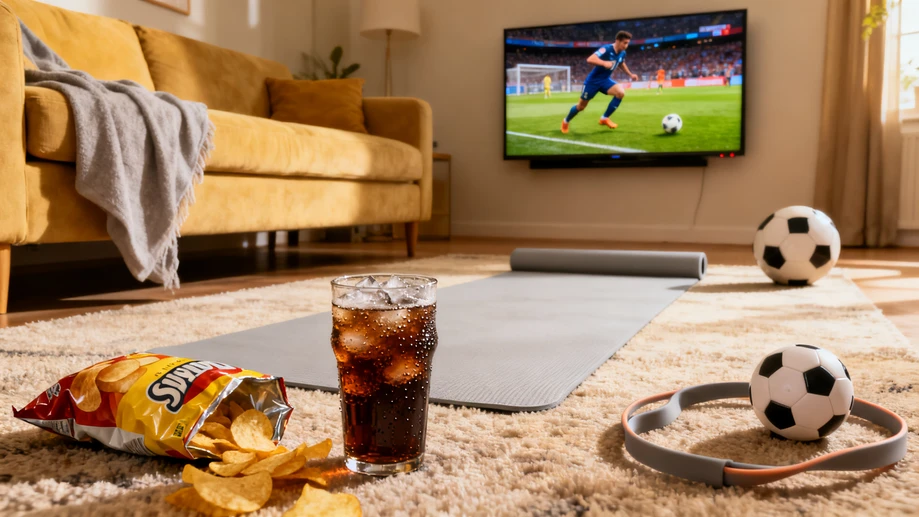
The vast majority of football fans have settled into a very specific ritual for recent World Cup matches: they drag out their softest throw pillows, stock up on cold bubbly drinks, salty crispy snacks and their favorite dips, set aside two full hours for every fixture, and sink deep into the couch before the opening whistle even blows. Many fans joke that a 90-minute match is a perfect excuse to skip any type of movement, and it is not rare for people to find their legs completely numb, their necks stiff, and their lower back throbbing by the final whistle, even if they have not moved a single inch from their seating spot. What most viewers fail to notice, though, is that there are dozens of short gaps scattered through every match, that are perfect for squeezing in tiny stretches or micro workouts, without forcing you to miss even a single minute of the on-pitch action you tuned in to watch.
You can build super simple, match-linked movement rules that require zero extra planning to follow, no fancy equipment, and no need to change out of your comfortable loungewear. Whenever the referee blows a whistle to call a free kick or a foul, stand up slowly and do five full shoulder opening stretches, rolling your shoulders back for 10 seconds each to release all the tension built up from leaning forward to watch close passes. Every time a goal is scored and the broadcast switches over to slow motion replay footage of the play, you can do 12 gentle in-place high knees, or 8 slow bodyweight squats right next to your couch, no jumping required if you live on an upper floor. During the 15 minute halftime break, instead of scrolling endlessly through social media or rushing to order extra takeout, spend 10 minutes working through a full body stretch sequence, targeting your tight neck muscles, your hamstrings that have been bent for hours, and the muscles along your lower spine. You can leave the match commentary audio playing in the background, so you will not miss a single point the analysts make while you move.
Linking these tiny movement moments to existing World Cup viewing rituals makes building a regular home fitness habit unbelievably easy, and it removes all the pressure that usually comes with forcing yourself to stick to a rigid workout schedule. You do not have to set a 6 a.m. alarm to hit the gym before work, you do not have to carve out two full hours from your already packed weekend plans, and you never have to feel like you are sacrificing your favorite entertainment to make time for exercise. Over the course of just one week of group stage matches, you will have accidentally completed dozens of small stretch sessions, and accumulated more active minutes than many people who drag themselves to the gym once a week and spend most of that time resting between sets. You can even add fun small reward rules for yourself: if you complete every single one of your planned micro workouts for the whole match day, you get to eat that extra pack of candy you have been eyeing, no guilt attached.
Casual tests run among groups of regular football fans show that this little trick delivers far better results than most people expect. One group of fans tracked their weight and body soreness levels across the full 32-team group stage, and found that the majority of participants lost 1 to 3 pounds without making any changes to their regular diet, and 87 percent of them reported no more stiff neck or swollen ankles after finishing a full match day. A lot of households that watch matches together have even turned these micro workout sessions into a silly friendly competition, where everyone tries to come up with the funniest stretch move to do during replay footage, turning an otherwise quiet watch party full of silent snacking into a lively lighthearted group activity. No one feels like they are working out, no one is counting calories or tracking heart rates strictly, but everyone leaves the experience feeling far more energized than they would if they spent the full time stuck motionless on the couch.
This approach to home fitness is so effective exactly because it does not treat exercise like a chore you have to complete, or a punishment you deserve for eating too many snacks. It fits naturally into the parts of your life that you already enjoy, and it turns a pastime that used to be connected to sedentary sluggishness, into one that slowly builds a consistent low pressure movement habit that sticks around long after the World Cup trophy has been lifted. Once the tournament wraps up, many fans find that they no longer crave spending three straight hours sitting motionless on the couch watching sports, and they automatically stand up to stretch after every 30 minutes of sitting, even when they are watching regular TV shows or working on their laptops. You will never have to argue with yourself about whether you “have time” to work out again, because movement has already become a seamless, natural part of your daily routine.