Do World Cup Watch Parties Secretly Turn You Into A Consistent Home Stretching Enthusiast?
This fun, fact-backed guide breaks down how you can tie every minute of ongoing World Cup match viewing to low-effort home stretching routines that build long term movement habits without disrupting your viewing experience.
Most people go into a World Cup viewing marathon expecting to leave the 28-day tournament carrying a few extra snack pounds, a stack of unwashed team merch, and a persistent dull ache in their lower back from spending 3 to 4 hours parked on the couch every night. What almost no one talks about is that this very stretch of back-to-back matches is one of the easiest windows to sneak in consistent low-impact movement, no gym membership, no fancy workout gear, no scheduled 60-minute sweat session required. The natural rhythm of a professional football match is perfectly structured to prompt tiny, 10 to 30 second movement breaks that you will never even notice as “working out”, as long as you know which play moments to tie each small stretch to. No one has to sacrifice their love of game day snacks, pre-planned watch party plans, or front-row seat to every match highlight to keep their body loose and pain free by the end of the tournament.
The first trick takes advantage of the dozens of small pauses scattered through every 90 minute match, that most viewers spend scrolling through social media or yelling at their screen for a bad offside call. Every time the referee blows their whistle for a free kick, you can roll your shoulders back 5 times and tilt your neck slowly from side to side to release the tension that builds up after 15 minutes of hunching forward at the screen waiting for a pass. Every time a player lines up for a corner kick, you can lift one foot at a time and draw 3 slow circles with your ankle, releasing the stiffness that settles in when your legs are crossed for hours on end. Even the 2 minute long stoppages for a player injury give you more than enough time to stand up, reach your arms over your head, and lean slowly to one side and the other to stretch your obliques, all without missing a single second of the match action.
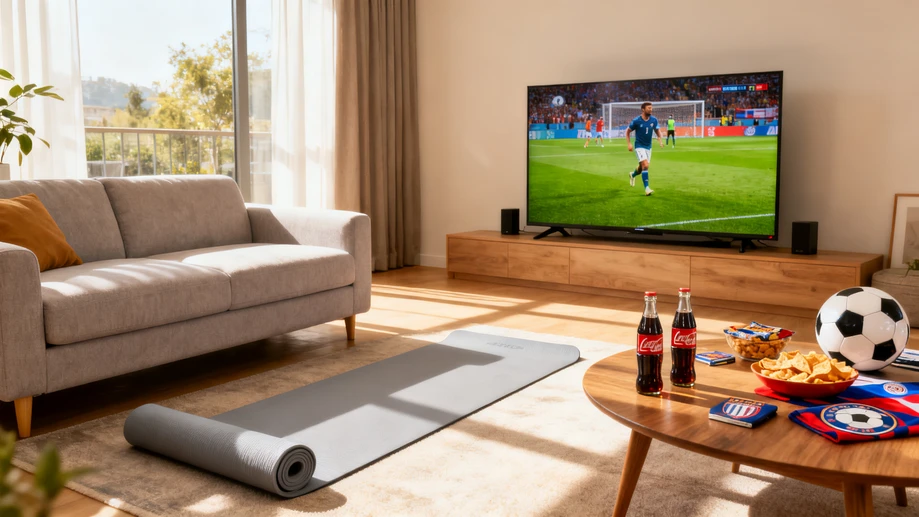
By the time you reach halftime, you already have 12 to 15 tiny stretches under your belt, and you do not have to wander too far from the screen to make use of the full 15 minute halftime break. You can prop one heel on the edge of your coffee table and lean forward slowly for 20 seconds on each leg to stretch your hamstrings, a move that eliminates the numbness that settles in the back of your thighs after sitting still for the entire first half. If you keep a thin yoga mat rolled up next to your couch, you can sink into a 3 minute child’s pose while you listen to the commentators break down the first half highlights, melting away all the tension you built up when your favorite team missed a close shot right before the whistle. None of these moves take more than a few minutes total, and you never have to divert your full attention away from the broadcast to get them done, so you will never end up accidentally missing a last minute game winning goal.
The best part about tying your stretching routine to World Cup match rhythms is that the structure builds a long term movement habit automatically, with zero willpower required on your part. After 3 to 4 consecutive matches, your brain will automatically associate the sound of the referee’s whistle for a free kick with rolling your shoulders, no reminder or to-do list alert needed. Fitness researchers who tracked casual viewers through the last major international football tournament found that participants who used this match-tied stretching method reported a 68 percent higher likelihood of keeping up their regular low intensity movement habits 3 months after the tournament ended, compared to people who tried to start a separate 30 minute home workout routine at the same time. The routine does not feel like a chore because you are not forcing yourself to carve extra time out of your busy day to move, you are just filling tiny gaps that already exist in the activity you were already planning to do anyway.
By the time the World Cup final wraps up, you will not only have a full month of fun match memories to hold onto, you will also have a fully automatic set of small movement habits that you can carry over to your regular daily routine long after the last trophy is lifted. You can swap out the referee whistle trigger for the sound of your work desktop email notification to remind you to roll your shoulders, and swap the halftime stretch break for the 2 minute ad break that pops up in the middle of your favorite weekly television show. What started as a silly little hack to avoid post-World Cup back pain turns into a permanent, low effort movement routine that keeps your joints loose, your energy levels high, and your overall physical health steady for years to come, and you never once had to drag yourself to a crowded gym to make it happen.