Can You Match World Cup Players' Flexibility Without Stepping Foot In A Gym?
This low-effort home stretching routine woven into your World Cup viewing schedule lets you stay loose and avoid post-marathon soreness without wasting extra time.
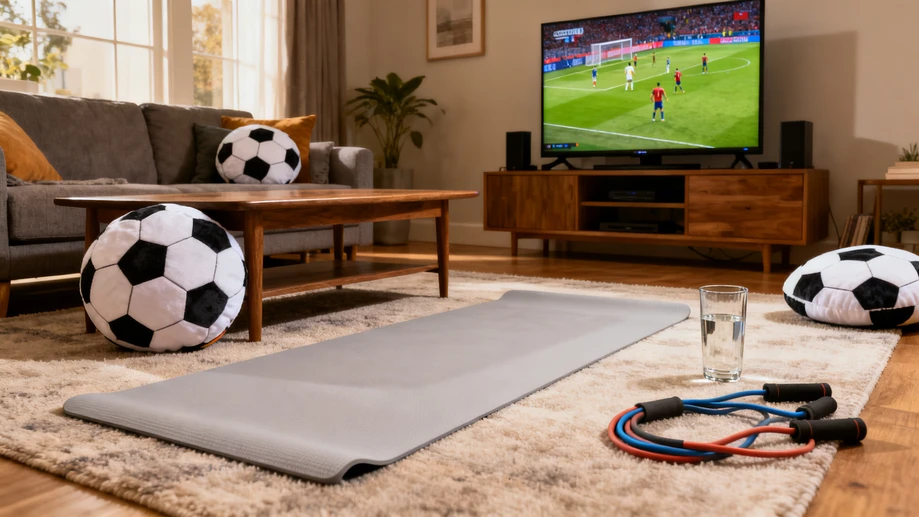
The ongoing global football frenzy has glued millions of fans to their couches week after week, with back-to-back match broadcasts, crumpled snack bags and iced soda cans stacking up beside their remote controls. Most fans never think about moving an inch during a 90-minute match, not to mention the pre-game analysis and half-time commentary that stretches their screen time to three hours straight. By the time the final whistle blows, many have to slowly drag themselves up from the cushions, rubbing stiff necks and numb ankles, wondering why pro players can sprint nonstop for the whole match while they can barely stand after sitting for half that time. What most casual fans do not realize is that the core softness and flexibility that keeps pro players from cramping mid-match does not require years of intense gym training to replicate, and most of it can be built right in their own living rooms with zero fancy equipment.
You do not even have to carve out separate time away from your World Cup viewing schedule to build this habit, since all the stretching moves can be fit perfectly into the two to three minute commercial breaks between match segments. For lower body tightness that builds up after sitting for hours, you can sit on the edge of your couch, hook one heel onto the opposite knee, and lean forward slightly until you feel a gentle stretch across your hip, holding for 30 seconds per side without ever taking your eyes fully off the screen. For stiff shoulders that hunch over snack bowls for hours, you can stand facing a blank wall, press your forearms against the surface at shoulder height, and slowly lean your chest forward to open up your chest muscles, a move so quiet and unobtrusive that you will not miss a single pass that pops up on the broadcast. Even the simplest calf stretch done by pro players before kickoff only requires you to prop the ball of your foot against the leg of your coffee table, no extra accessories needed to get the exact same effect.
Many long-time fans have already turned these tiny stretching moves into a fun part of their personal match viewing ritual, rather than treating them as a tedious workout chore. A lot of people set a silly little rule for themselves every time they turn on a match, that they will finish three rounds of full body stretches every time their favorite team scores a goal, and do five extra slow ankle rotations if a player on the screen pulls off an unbelievable fancy footwork trick. These tiny, reward-linked actions add up far faster than you would expect, and a full World Cup month of this casual movement will add up to more active minutes than most people squeeze into their regular weekly workout schedule at the gym. You will never find yourself forcing yourself to drag to a gym after work, or feeling guilty for skipping a planned workout that you never had the energy to complete.
This casual movement pattern also works incredibly well for the whole family, rather than being a solo hobby for a single fitness fanatic. You can make a silly little stretching contest out of the half time break, where everyone has to hold their best hamstring stretch pose until the half time highlight reel ends, and the last one to break their pose gets to pass out the snack bags for the second half. No one has to break a sweat or train to exhaustion to join in, and even the youngest family members will start wiggling around and copying the stretches after a few matches, turning the usual mindless couch slump into a light, fun family activity that no one resents. Before you know it, everyone in the house will automatically stand up to stretch the second the half time music starts playing, forming a tiny shared movement habit that sticks far longer than the tournament itself.
By the time the last final match wraps up at the end of the tournament, you will not just walk away with thousands of memorable goals and iconic plays stored in your memory. You will also walk away with a consistent, low pressure movement habit that you can carry long after the final trophy is handed out, and none of the post-tournament sluggishness or extra unwanted weight that usually comes from weeks of nonstop marathon viewing. You do not need to become a professional athlete, or even hit the local gym once, to get all the benefits that come with loose, flexible muscles and a little more daily movement, all you need to do is take two tiny minutes of action between the plays you already love watching. It turns out catching up to the flexibility of your favorite World Cup stars is far easier than you ever imagined, and you can start right when the next match kicks off tonight.