Who Says World Cup Viewers Can’t Get Pro-Level Stretches Done Right On Their Couch
Discover low-effort, fun stretches you can do mid-World Cup match breaks to beat post-sitting stiffness and build tiny consistent movement habits without stepping out of your living room.
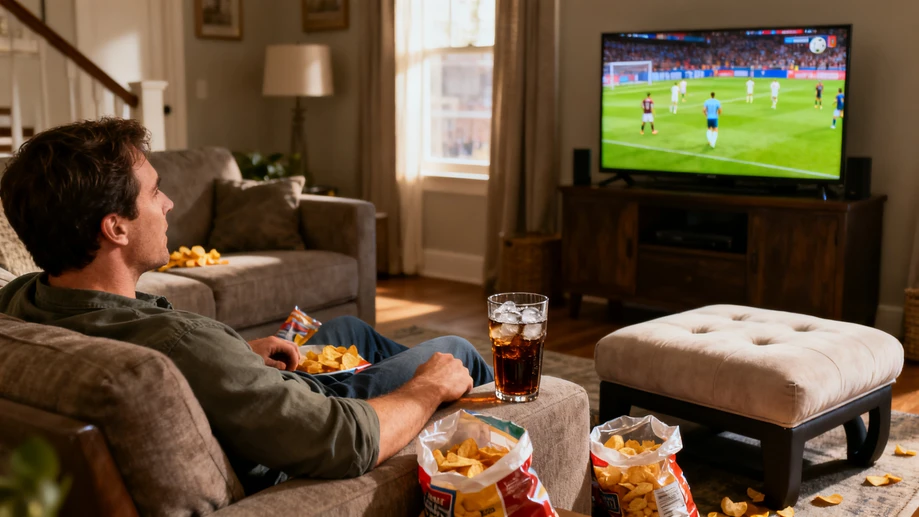
The entire World Cup viewing experience for most casual fans revolves around sinking into the softest spot on their couch at kickoff, grabbing a stack of snacks and an ice-cold drink, and not moving a single muscle for the full 90 minutes plus stoppage time, except to lean forward and yell at the screen when a near miss flies past the goal line, or to reach for another handful of cheesy chips. By the time the final whistle blows, most people stumble to their feet and realize their lower back has locked up, their hamstrings feel tight as overstretched rubber bands, and their neck is stiff enough that turning to the side to grab their phone sends a tiny jolt of discomfort all the way down their spine. A huge number of fans report spending the entire day after a marathon viewing session feeling sore and sluggish, putting off quick errands because they cannot summon the energy to walk even a few blocks, and writing the stiffness off as an unavoidable side effect of enjoying the most popular sporting event on the planet.
What almost no one talks about is that the 12 to 15 minute half time break, the 2 minute long replay montage that airs after a goal, and even the 90 second ad slot between stoppage time and extra time are all perfect windows to sneak in tiny stretches that professional football players use to warm up before they step out onto the pitch. You do not need to change into stretchy workout gear, roll out a bulky yoga mat, or even leave the immediate vicinity of your couch to complete these movements, and none of them will pull your focus away from the post match analysis or line up updates rolling out on screen. The side leg swing stretch you see players doing while leaning on the sideline advertising boards can be done holding onto the edge of your couch, lifting one leg gently out to the side and back for 15 seconds before switching sides, to release all the built up tension in your hip flexors that piles up after sitting for 45 straight minutes.
The best part of tying these small stretches to your World Cup viewing routine is that you do not need to set annoying phone reminders or drag yourself through a pre-planned workout schedule, because the breaks in the broadcast act as a natural, pre-set timer that you do not even have to think about. Most fans who start adding these movements to their match viewing rhythm report that after three or four matches, the stretches feel like a natural part of the viewing ritual, the same as grabbing a fresh drink before the second half kicks off. After a week of consistent small movements, you will notice you no longer stagger to your feet after the final whistle, and you will even be able to jump up to celebrate a last minute winning goal without worrying that you will pull a muscle in your calf mid cheer.
Every common household item you already have sitting around your living room can act as a perfect prop for these stretches, no fancy fitness equipment required. The low fabric footstool you prop your feet up on during regular viewing works perfectly for a seated hamstring stretch, where you rest one heel on top of the soft surface and lean forward gently from your hips until you feel a mild, comfortable pull along the back of your leg. Even the full, unopened snack bag can act as a small weight to add gentle resistance to your shoulder rolls, which will work out all the kinks that build up when you hunch over your lap to stare at the screen for extended periods. There is zero pressure to hit a certain rep count or break a sweat, because these stretches are not formal workouts, they are just tiny, low stakes movements you do to kill time while the teams are heading back out onto the pitch.
By the time the entire World Cup tournament wraps up a month later, most people who stuck to these tiny break time movements do not even realize they have built a sustainable, low effort movement habit that sticks around long after the final trophy has been lifted. They will automatically stand up and do a few quick hip swings when they hit a lull in their work day at their office desk, or stretch their calves while they wait for their dinner to finish heating up in the microwave, and they will no longer spend full weekends glued to their couch without moving at all. What feels like a silly, throwaway quirk to make watching matches more comfortable turns into a permanent small lifestyle upgrade, and you never even had to sacrifice a single minute of match time to get it, making it one of the most unexpected, fun hidden perks of tuning into the World Cup.