Who Knew Watching World Cup Matches Could Help You Stick To A Daily Fitness Routine
A fun, science-backed guide to turning your couch-bound World Cup viewing sessions into a pain-free path to long-term workout habits you will never quit
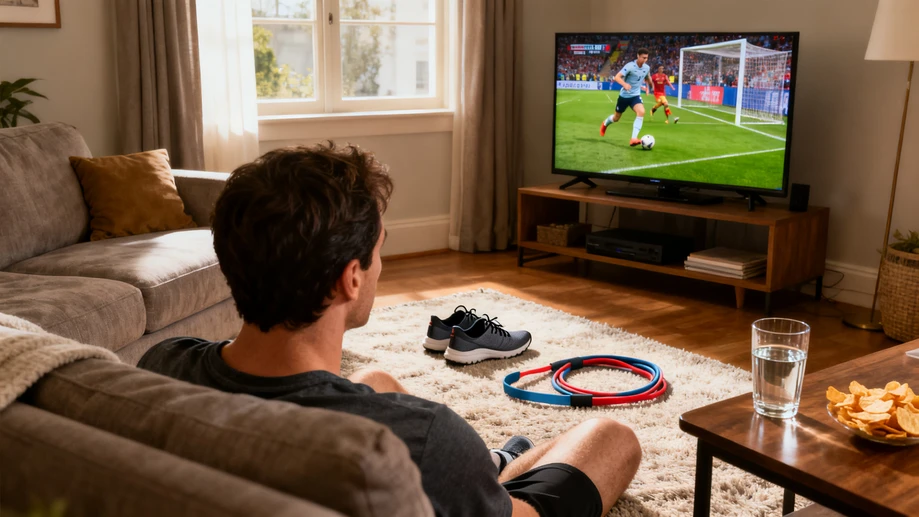
For most casual football fans, the World Cup is a four-year ritual defined by overstuffed chip bags, lukewarm soda cans, and 90-minute (plus stoppage time) stretches of glued-to-couch staring that leaves your lower back screaming and your legs stiff as planks once the final whistle blows. You might have told yourself dozens of times that you would squeeze in a workout between matches, but the pre-game analysis, half-time show, and post-match hot takes eat up every spare minute you thought you had, leaving zero motivation to change out of your sweatpants and hit the gym. The good news is you do not need to carve out separate, dedicated workout time to build a consistent fitness habit, and you do not even need to miss a single second of the match action to get started.
The secret hack lies in tying every tiny movement you make to the natural rhythms of a football match, so motion becomes a seamless part of the viewing experience instead of a boring chore you have to force yourself to complete. Try standing up and doing slow side lunges during the 15 minutes of pre-match build-up as the commentators run through lineups and pre-game predictions, and do quick calf raises every time the camera pans to a striker lining up for a corner kick. When the referee pauses play for a VAR review or an injury break, you can do a set of gentle torso twists and shoulder rolls to work out the kinks that build up from hunching over to see small player movements on the screen. None of these movements take your focus away from the game, and all of them add up to 20 to 30 minutes of low-impact movement over the course of a single 90-minute match without you even noticing.
To turn these scattered little movements into a long-term daily habit, use the World Cup’s built-in tournament structure as a natural 28-day challenge that keeps you engaged without feeling like a grind. During the group stage, when there are three to four matches a day spread across 12 full days, commit to adding only one tiny new movement per match week: you could add 10 glute squeezes every time your favorite team makes a successful pass in week one, and 8 wall sits every time a player takes a shot on goal in week two. The surge of excitement you feel when your team scores a goal will make the extra little movement feel like a celebratory action instead of a punishment, and dozens of casual fans who have tried this trick report that they actually end up looking forward to their little movement breaks even when their team is not playing.
After the group stage wraps up and the knockout rounds begin, most fans have already put in roughly two weeks of consistent low-effort movement, and the habit will feel far more natural than forcing a random 30-minute workout after a full day of work. You will notice small, measurable changes within that short window too: the persistent shoulder tightness you used to get after every full day of back-to-back matches will disappear, you will not huff and puff when you carry a full load of groceries up two flights of stairs, and you will stop feeling groggy and sluggish for hours after a late night match that finishes past midnight. Those small, immediate rewards are the exact thing that wires your brain to associate movement with fun, instead of linking working out to frustration and exhaustion.
Even if the team you support gets knocked out long before the final match, you will have already built more than three weeks of steady movement patterns that easily translate to your regular off-World Cup routine. You can carry over the little 10-minute movement breaks to your regular TV watching time, or swap your old post-work snack session for a quick stretch session before you sit down to watch your favorite weekly show. You will never again have to wait for a New Year’s resolution to start building a fitness habit, because you already used the most fun, high-energy global sports event of the year as your very own personal workout bootcamp that never felt like work at all.