
You Really Don't Know How Many Wild Hidden Fun Facts The World Cup Holds Behind Its Glamorous Public Appearance
This lighthearted popular science piece walks you through a large collection of little-known, quirky details about the world's most beloved international football tournament, and breaks all the boring old stereotypes people hold towards this global sporting event.
The very first iteration of the World Cup hosted back in 1930 carried none of the standardized high-tech supporting systems seen in modern tournaments. Cross-ocean voyages took weeks to deliver all required equipment to the host venues, match balls were mostly sewn by local small-scale workshops with no uniform quality control, and the weight of different match balls across the whole event could differ by up to 200 grams. Multiple competition venues were converted hastily from local community sports grounds rather than purpose-built stadiums, with turf laid only three months before the opening kickoff, and patches of grass thinner than 3 centimeters were found in nearly every penalty area. Unwritten unregulated little tricks like injecting a small amount of water into the ball to increase its weight for better header control became unspoken small hacks favored by many competing sides, and heavy rain would often leave puddles deep enough to submerge half of a standard football across large sections of the pitch, forcing game officials to pause matches for 20 minutes at a time to sweep excess water off the grass. These messy, unstandardized early experiences later pushed the official committee to release the first set of fully unified specifications for official match balls, venue conditions and match rules in the 1970 tournament held in Mexico.
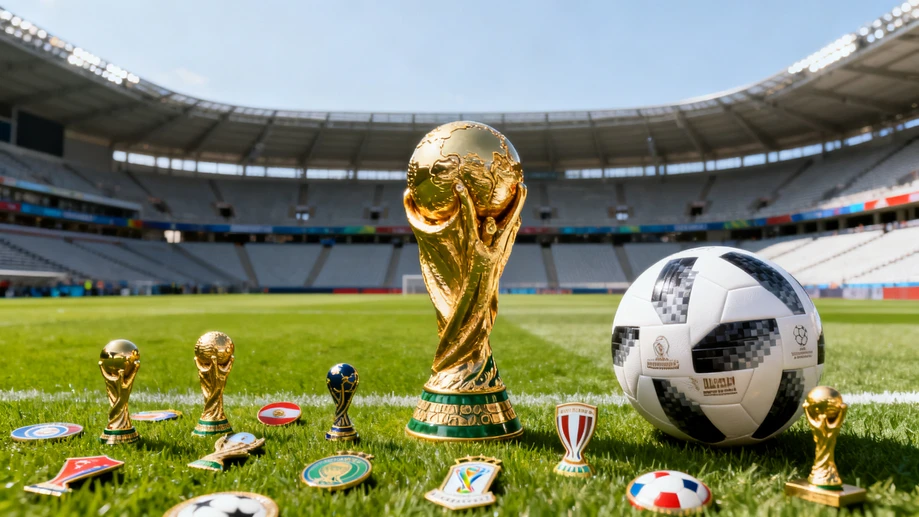
The iconic golden trophy that every competing squad chases for decades has its own extremely quirky history that very few casual viewers know about. The original design named Jules Rimet Trophy was made of gold-plated sterling silver mounted on a solid blue marble base, and it was designed to be kept permanently by any side that won the title three times across different non-consecutive tournaments. Before the new design dubbed FIFA World Cup Trophy was put into official use in 1974, the old trophy once spent years hidden under layers of soft fabric inside a private storage space to avoid being seized during a turbulent wartime period, and no trace of it had ever been leaked to the public for that whole stretch of time. The current 6.1-kilogram solid gold plated trophy is 36 centimeters tall, and its surface is polished to such a high standard that no scratch or dent is allowed to stay on its body for more than 48 hours after the final award ceremony, even the faint fingerprints left during the celebration process will be wiped off completely by professional maintenance staff before the trophy is moved to its next exhibition venue.
Many of the wildest statistical records left in the 90-year history of the World Cup sound like fictional settings made up for casual fun casual party games. The fastest recorded goal in the whole tournament history landed only 11 seconds after the opening whistle blew, the highest total score of a single match reached 10 goals with the final scoreline ending at 10 to 1, and there are even multiple instances where the final result of a group stage match ranking was determined by drawing lots after two competing sides scored equal points, equal goal difference and equal total goals across all previous group games. There is also a long-running streak that stretches across 16 consecutive World Cup tournaments where no host nation has ever been eliminated during the group stage of the event, a record that still remains unbroken even after the 2022 edition held in Qatar. Even records that sound extremely unlucky can hold on for decades: more than 20 competing sides have worn all-white match jerseys during finals, and none of those sides have ever lifted the championship trophy at the end of their final match.
The World Cup’s influence stretches far beyond the green grass of the competition pitches, and it can stir up huge changes to the entire regional economy and social atmosphere of the host country even years before the opening ceremony. Official licensed merchandise sales can break through 10 billion US dollars in a single tournament cycle, with limited edition keychains, branded footballs, custom jerseys and themed household items selling out within hours after their official launch. Local public transportation systems will get full upgrades to support the surge of cross-region passenger flow, with extra subway lines, dedicated event bus routes and expanded airport terminals all finished at least six months before the first match kicks off. Specially launched themed limited-edition food, drinks and cultural products will occupy nearly 40% of all shelf space in large supermarket chains across the whole host nation during the event period, and themed public art installations will appear in every major public park, city square and commercial district of all host cities.
In recent years, the continuous upgrade of supporting technologies has brought tons of new fun viewing experiences for global audiences that could never be achieved in old tournaments. The goal line detection system can confirm whether the whole ball has crossed the goal line within less than 1 second, and send a clear vibration alert to the referee’s smart watch to eliminate all ambiguous judgment situations that used to cause heated global debates. High-speed camera arrays covering every corner of the pitch can capture every tiny contact between the ball and any part of the field, and replay footage at 400 frames per second to show even the smallest change in the ball’s trajectory. Interactive viewing functions on digital broadcast platforms allow viewers to switch between more than 20 different camera angles freely during live matches, pull up real-time data of every squad’s pass success rate, running distance and attack tendency with one single click, and even watch 3D animated replays that rebuild the full view of a spectacular goal from any possible perspective.