
Do You Know These Surprising World Cup Trivia Even Longtime Fans Have Never Heard Of
This casual informative piece uncovers a series of little-known interesting facts about the FIFA World Cup that add far more fun to your every viewing experience of the top football event on the planet
The very first FIFA World Cup held in 1930 in Uruguay did not have any standardized match ball rules at all, and the final scene was far more chaotic than most people could imagine. The two finalists Uruguay and Argentina both insisted on using their own domestic match balls for the final, and the organizing committee, which had no prior regulation for this kind of dispute, finally made a ridiculous compromise that allowed the two sides to use Argentina’s preferred ball in the first half, then switch to Uruguay’s match ball for the second half. The final score ended up 4 to 2 in Uruguay’s favor, and later football historians joked that no one could tell if the second half ball was more suitable for the host team’s playing style, or the visiting team simply did not get used to the new ball they held for the first time at halftime. This messy start set a playful tone for all the following World Cup developments, full of unexpected twists that no one could predict in advance.
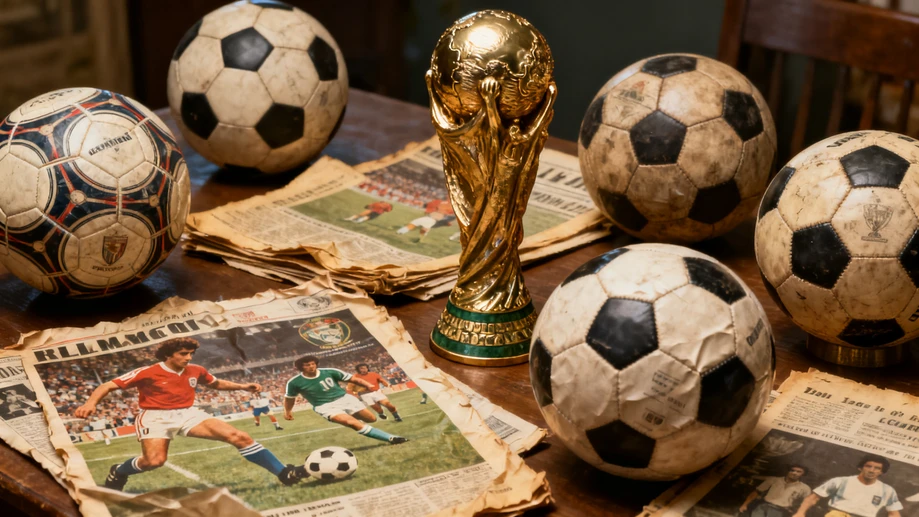
The original World Cup trophy known as the Jules Rimet Trophy had a far more adventurous experience than most football fans realize, long before it was permanently awarded to Brazil in 1970. Back in 1966, the trophy was put on public display at a stamp exhibition in London just months ahead of the World Cup hosted by England, and it was stolen directly from the heavily locked exhibition hall under the guard of multiple staff members. Local police launched a city-wide search that lasted for seven days with no progress at all, until a stray dog wandering in a suburban park dug the trophy out from under a bush wrapped in old newspaper. The unexpected turn made this stolen incident one of the most widely told anecdotes in World Cup history, and after Brazil was awarded the trophy permanently for winning three championships, the newly designed FIFA World Cup Trophy that debuted in 1974 was made with a clear new rule that no national team can keep the original trophy forever even if they win three titles, and all three-time champions can only get a full size replica made of gold-plated brass instead of the solid gold original.
Many of the rules applied to modern World Cup matches were not designed in a pre-planned way, but summed up from previous painful and unfair lessons. Before 1982, the two matches of the final round of each World Cup group did not start at the exact same time, and teams that knew the results of other matches often made mutually beneficial arrangements to eliminate the third team in the group. The most famous case took place in 1982, when West Germany and Austria played a deliberately conservative game after West Germany scored a 1-0 lead in the 10th minute, no side made any aggressive attacking attempt for the remaining 80 minutes, and this result directly knocked Algeria out of the group stage despite their outstanding performance in the first two matches. Strong public criticism from fans all over the world pushed FIFA to rewrite the rule book, and from 1986 onwards, all final round group matches across 8 groups will kick off at exactly the same time, eliminating the vast majority of space for unfair tacit match arrangements that harm third teams.
There are also a large number of quirky record-breaking facts hidden in the 94 years of World Cup history that no professional football data analysts could have predicted at the very beginning. The longest gap between two World Cup appearances for the same national team player reached 16 full years, belonging to Egyptian midfielder Mohamed Aboutrika, who participated in the 1990 World Cup as a young new player and did not make his second World Cup appearance until the 2006 tournament held in Germany. For nearly 92 years, no host country of the World Cup had ever failed to advance out of the group stage, until the 2022 World Cup hosted by Qatar broke this long-standing unwritten record. Even the all-time highest total goal count in World Cup history did not belong to any traditional top-tier powerhouse country for decades before 2022, the total number of goals scored across all World Cup matches by the Brazilian national team only surpassed the total number of goals scored by the German national team in the 2022 tournament.
For ordinary viewers who do not pay close attention to every professional league match through the whole year, the biggest charm of the World Cup never lies in the tactical comparison or championship prediction of each match. These trivial, funny, and unexpected trivia facts connect the athletes chasing the ball on the pitch, the billions of viewers sitting in front of the screen across every continent, and the whole 90-plus years of event history together into a vivid, living story that is updated every four years. No matter which team you choose to support when the next World Cup kicks off, these little known hidden details will definitely bring you a totally different viewing experience that you have never had before.