Who Says You Can Only Cheer For World Cup Players From Your Couch
Turn every 15-minute halftime break and scattered match pauses of ongoing World Cup games into low-effort home fitness sessions that build long-term movement habits, no fancy gym membership or expensive gear required.
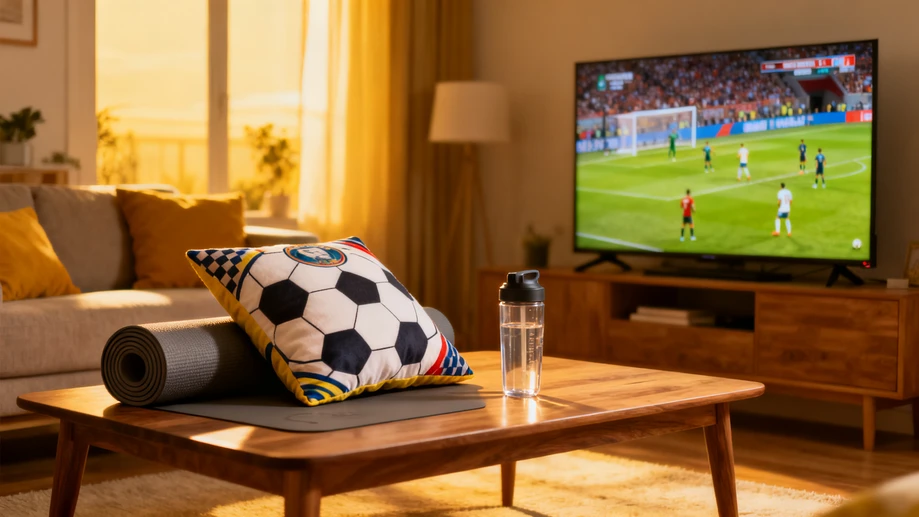
The vast majority of football fans around the world have fallen into the exact same routine over the past few weeks: clear the work schedule ahead of key match days, stock up on cold beer, crispy potato chips and assorted takeout snacks, sink deep into the softest spot on the living room couch the second the opening whistle blows, and stay glued to the screen until the final whistle blows late at night. Many people wake up the next morning with stiff necks, sore lower backs, and a vague sense of guilt that they have spent three whole weeks skipping all their planned exercise, while the snack bags piling up next to the couch have added an unexpected layer of abdominal fat that no one planned for. Most of these fans already know that sitting for hours straight is not great for their physical state, but they cannot bring themselves to tear their eyes away from the ongoing match to hit the gym, or even do a few simple stretches, convinced that any time away from the screen will make them miss the most iconic goal of the entire tournament.
The good news is that you never have to choose between catching every wonderful moment of the World Cup and taking care of your body, and the easiest entry point for this perfect balance is casual stretching you can do even without leaving your living room. If you count carefully, you will find that a full 90-minute World Cup match, plus half time break, has more than 30 minutes of scattered pause time that does not involve live attacking action: there are slow motion replays of goals that you have already seen three times, long close ups of referees reviewing VAR footage, shots of trainers running onto the field to check on slightly injured players, and even extended segments of sports commentators breaking down tactical layouts with on-screen graphics. All these idle gaps are perfect for you to do slow, gentle stretches that target the areas that have gone stiff after hours of sitting, you can roll your shoulders back and forth to release tension built up from leaning forward, tilt your neck side to side to squeeze out the soreness huddled at the base of your skull, or even do a few deep hip opening movements while still sitting on the edge of your couch, without ever taking your full attention off the content playing on the screen.
If you want to turn these scattered stretching sessions into a solid, long term home fitness habit, you can tie your tiny movement goals directly to the game moments you already get excited about, to build a positive conditioned reflex that requires zero willpower to maintain. For example, you can make a small rule that every time your favorite team completes a successful pass that breaks through the opponent’s defensive line, you do 5 slow calf raises next to your couch, every time your selected player takes a clean shot on target, you hold a 20 second wall sit, and every time a goal goes into the back of the net, you do 10 quick bodyweight squats while you jump up to celebrate. Over the course of just three or four matches, you will find that your brain no longer associates movement with a boring chore you have to force yourself to finish, instead it links every small burst of movement to the surge of joy you feel when your team plays well, which makes you look forward to these small movement moments instead of dreading them. Unlike the expensive gym membership you bought last January that ended up collecting dust in the corner, this fitness routine requires no extra time carved out of your schedule, no new gear you have to research and buy, and zero extra motivation to push you to show up.
Plenty of fans who have tested out this tiny World Cup themed fitness trick report that they did not even notice how much movement they got in over the course of a single match, until they stepped on the scale after watching 3 consecutive days of games and found they had not gained a single pound, even after eating all the usual game day snacks. One regular amateur runner said he ended up completing 22 minutes of light cardio over the course of a single quarter final, all during the extended VAR reviews and half time break, and he never missed a single key goal or exciting highlight. The small adjustments you make to your usual game day routine will also slowly fix all the tiny health problems that usually pop up after a month of World Cup viewing, you will no longer wake up with a numb arm after sleeping on the couch following a late night match, and you will not have to rush to buy a pain relief patch two days later because your lower back has seized up from sitting still for 4 hours straight.
You do not need to wait until the entire World Cup tournament wraps up to write a long, intimidating new year fitness plan that you will abandon after three days. All you have to do right now is push the half empty bag of potato chips a little further away from your hand, stand up for a few seconds while the players are lining up for a free kick on the screen, and stretch your arms all the way over your head to release the tension that has built up in your shoulders over the past hour. These tiny, low stakes movements tied to the matches you love are the perfect starting point to build a sustainable movement habit, and by the time the final trophy is lifted at the end of the tournament, you will be shocked to realize you have spent four weeks moving more than you have in the entire previous year, all without ever missing a single second of the World Cup fun.