
Can You Actually Get Fit From Binge Watching Every World Cup Match At Home
Explore the unexpected low-effort fitness hacks hidden in your World Cup viewing schedule that help you build consistent movement habits without giving up any match moments you love
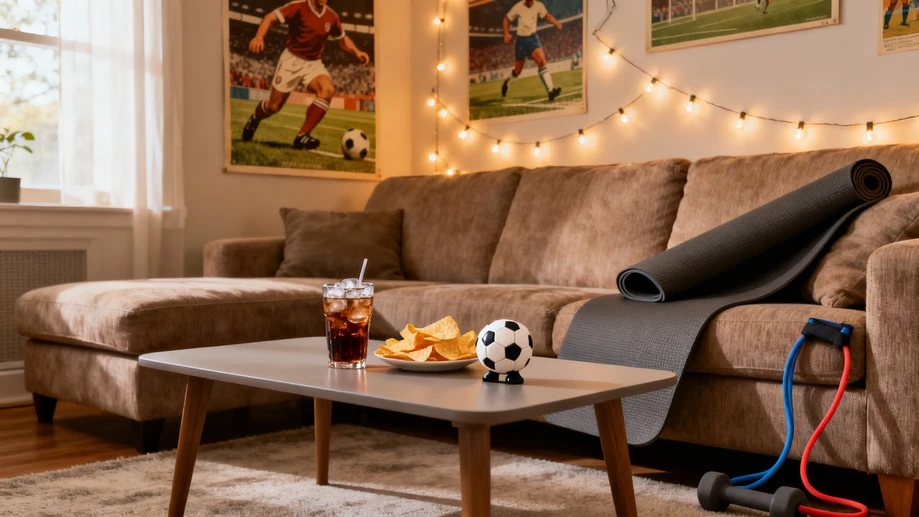
For most casual and diehard football fans, the World Cup schedule is already mapped out weeks before the first kickoff, with stacks of favorite snacks, iced cold drinks and the comfiest couch cushions arranged right in front of the largest screen in the house. It is easy to sink into that soft seating for 90 full minutes plus stoppage time and halftime, barely shifting your position even when your legs fall asleep or your lower back starts to ache, and most fans end the tournament with a new set of stiff muscles and zero added physical activity to show for their weeks of dedicated viewing. What almost no one talks about is that this existing routine you are already fully committed to can be tweaked just slightly to turn every watch session into a tiny, fun fitness session that does not pull your attention away from even a single pass or goal.
You do not need any fancy gym equipment, expensive workout gear or even a separate corner of your home to pull this off, because every pause in match action gives you a natural built-in reminder to move your body for 30 seconds to several minutes at a time. Every slow motion replay of a save or a tricky dribble gives you the perfect window to do slow standing side stretches, reaching one arm high over your head and leaning gently to the opposite side to release the tension built up in your torso from sitting still. Every break for a substitution or a VAR review lets you step away from the couch to do 15 slow bodyweight squats, or walk laps around your living room while you listen to the commentator break down the call, and you will barely notice you are working out because all your focus stays locked on what is happening on the screen. The full 15 minute halftime break is even more flexible, and you can fit a full sequence of leg stretches, shoulder rolls and light cardio moves like high knees or jump steps during that window without missing the halftime analysis at all.
The biggest advantage of building these tiny movement breaks around your World Cup viewing routine is that it removes all the friction that usually stops people from sticking to regular fitness habits. Most people quit their new workout plans a week or two in because they see exercise as a separate, big task they have to carve out time for, change their clothes for, and push through even when they feel tired after a long day of work. Tying small movement actions to something you already look forward to every day eliminates that mental resistance entirely, because you never feel like you are sacrificing fun to check a workout off your to do list. After three weeks of following this pattern, your brain will automatically associate the sound of the referee’s whistle to pause play with the urge to stand up and move, and you will find yourself shifting out of a sedentary position even when you are not watching a match, which is the exact foundation of a sustainable lifelong movement habit.
Thousands of fans who tested this trick during the last World Cup shared their funny, low effort results online, and almost no one had to give up their usual viewing treats or miss a single big play to hit their weekly movement goals. Some fans developed their own silly little rules tied to match events, like doing five quick jump squats every time their favorite team completes a successful cross, or holding a 10 second plank every time a referee shows a yellow card. By the end of the group stage, many of them had logged over 40 extra minutes of gentle movement each week, lost a couple of pounds of excess water weight, and completely got rid of the stiff neck and lower back pain they used to get after long days of sitting to watch matches. No one pushed themselves to exhaustion, no one had to follow a strict meal plan, and every bit of extra movement felt like a silly bonus attached to the fun of watching the game, not a grueling chore.
When the final World Cup whistle blows and the tournament wraps up, you will not have to drop the good habits you built over the weeks, because they will already be a natural part of how you enjoy leisure time at home. You will automatically insert short stretching breaks when you are watching other sports events, your favorite TV shows, or even long form video content on your laptop, and you will never fall back into the old habit of sitting completely still for three or four straight hours without moving. You do not need to sign up for an expensive gym membership, or force yourself to follow a brutal high intensity workout plan to stay in good shape, because the most effective long term fitness habits are the ones that fit seamlessly into the life you already live, not the ones that force you to rearrange every part of your schedule to accommodate them.