Who Said World Cup Match Marathons Have To Turn You Into A Total Couch Potato
This down-to-earth fun guide shows you how to build consistent long-term exercise habits without missing a single minute of your favorite World Cup matches
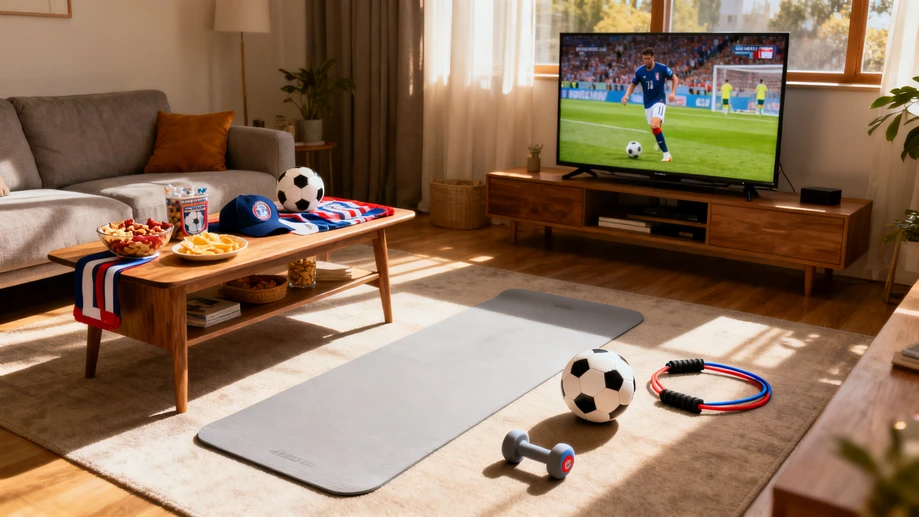
If you have ever spent a whole World Cup camped out on your living room sofa, piling up pizza slices and soda cans within arm’s reach and not standing up for 4 hours straight to catch back-to-back group stage matches, you are far from alone. Most people go into every World Cup fully expecting to gain a few extra pounds after a month of nonstop viewing, and many even joke that their only workout during the entire tournament is the short walk to the kitchen to grab more snacks. What almost no one talks about, though, is that the World Cup’s unique rhythm of 90 minutes of play, staggered breaks, stoppage time and replay sessions creates the perfect pre-built structure for anyone to build sustainable daily movement habits, no expensive gym memberships, no strict diet plans, and no massive chunks of free time required. You do not have to rearrange your entire schedule to fit in a workout to reap the benefits, you only need to use the tiny gaps you already have built into your viewing routine.
The trick that makes this system work far better than most generic habit-building plans is that it attaches tiny, low-effort movement actions to the triggers you already respond to automatically as a football fan. For example, every time the referee blows the whistle for a foul that stops play, every time the broadcast cuts to a slow-motion replay of a near-miss shot, or every time the commentators cut away to show a pre-recorded interview segment, you have a 30 to 90 second window that you almost certainly spend mindlessly scrolling through social media waiting for the match to resume. Instead of scrolling, you can simply stand up from your sofa, knock out 12 quick bodyweight squats, stretch your hamstrings for a few seconds, or pace around your coffee table while swinging your arms in wide circles. These movements are so short and so unobtrusive that you will never miss a single important moment of the match, and you will not even have to take your eyes off the screen to do most of them. Over the course of a single 90 minute match with regular stoppages, these tiny bursts of movement add up to 15 to 20 total minutes of light activity, more than the recommended daily minimum movement amount for people who work desk jobs full time.
You can take this system a step further and tie your movement sessions directly to the exciting match moments you already cheer for, to turn working out into a fun rewarding game instead of a boring chore. For example, you can set a simple rule that every time the team you support completes a successful attacking run, you do 10 quick standing calf raises, every time your favorite star player lands a clean accurate pass, you stretch your upper back for 5 seconds to release the tension from hunching over your sofa, and every time your chosen team scores a goal, you do a little celebratory movement around your living room that gets your heart rate up a little. Fans who have tried this trick in previous major football tournaments say that after a week or two, they stopped seeing movement as a punishment they had to force themselves to do, and started actively looking forward to their favorite team scoring more goals so they could get more little bursts of movement in to celebrate. Many of these fans reported that after the tournament wrapped up, the lower back stiffness and neck pain they had from years of full time desk work went away entirely, and they had more energy to walk up flights of stairs without getting winded long after the final trophy was handed out.
This pattern works because it bypasses the biggest hurdle most people face when trying to build new exercise habits: the need to summon up huge amounts of willpower to start a workout session. Most traditional workout plans require you to carve out an hour of time, change into special athletic clothes, drive to a gym, and force yourself to push through a full session even when you are tired after a long day of work, which is why 80% of people who sign up for gym memberships in January end up stopping their routines within three months. When you tie your movement to already existing, automatic triggers that you do not have to think about, you do not need that willpower at all. Over the course of two to three weeks, your brain will build a solid new neural connection that links the sight of a referee blowing a whistle to stop play with the action of standing up to move, and that connection will stick with you long after the World Cup final match ends.
By the time the tournament wraps up, you will not just have hundreds of amazing viewing memories and a favorite team to support for the next four years, you will also have a consistent low-fuss movement habit that fits naturally into your daily life. You will not feel like you had to give up any of the fun of the World Cup to get healthier, and you will not have to push yourself to hit arbitrary intense fitness targets that burn you out quickly. Many fans who started this routine during the last World Cup later found themselves signing up for local casual amateur football matches with their friends, taking long evening walks after work, and naturally choosing to stand up and stretch during ad breaks even when they are watching regular television shows with no football on, all without any extra planning or effort. You do not need to wait for some perfect, mythical "right time" to start getting more active, the next stoppage in the World Cup match you are watching right now is the perfect first step.